Showing posts sorted by relevance for query Williams. Sort by date Show all posts

Wednesday, 8 May 2019

IT'S GETTING HOT IN NEW YORK (IN OTHER NEWS): CONTESTED CARAVAGGIO + MOZART, BEETHOVEN SCORES, NIJINSKY MEMOIR TO BE MADE AVAILABLE FOR ADMISSION-FREE PUBLIC VIEWING (UPDATE)


New York has long been a hub for the artistic intelligentsia - the go-to one stop shop in the American east for Gesamtkunstwerk.

The Big Apple is set to blaze several degrees hotter in the coming months as a slew of historically significant works of art will be made available, entirely cost-free, for public consumption - a move I enthusiastically applaud - great art deserves to be shared!

The first item on the docket is the contested Caravaggio, which Unraveling Musical Myths discussed in a previous post in April of 2016.

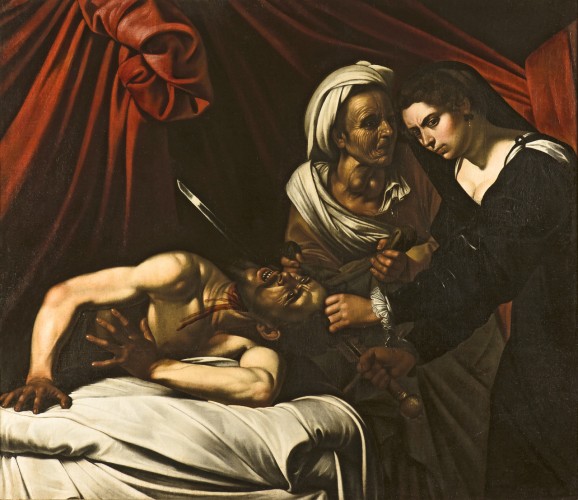
Starting this Friday, May 10, the recently discovered allegorical painting of Judith decapitating Holofernes, “Judith and Holofernes” (ca. 1607), found in the attic of a home in Toulouse in 2014 and later attributed to Caravaggio (which remains a subject of debate) will be making a week long pit-stop at the Adam Williams Fine Art Gallery (24 East 80th Street) before returning to Toulouse where it will be briefly displayed before being auctioned off later next month (at the Halle aux Grains, 1 place Dupay.)

This is a great time to view this stunning work of art up close - whether or not this piece is in fact a second go at this famous Old Testament tale by one of the most influential masters of the Italian Baroque/Renaissance or the work of another, incredibly gifted artist (some believe it to be painted by the brush of Louis Finson, who copied an original work)[1], it is worth making the trip to the gallery: the Louvre declined the acquisition of this piece back in 2016 (for budgetary reasons) and it is presently unknown with whom - or where - this controversial painting may wind up. This may be a once-in-a-lifetime visual experience for those U.S. bound.

If indeed a true Caravaggio, the c. 1607 Judith Beheading Holofernes would make the piece the 66th surviving work of the artist. Caravaggio's known work based on this scene from the Book of Judith was rediscovered in 1950 and is presently part of the collection of the Galleria Nazionale d'Arte Antica in Rome.

UPDATE: Judith Beheading Holofernes has been sold to a private buyer who intends to display the work in an as yet unrevealed "major" public gallery. The purchase occurred two days ahead of the painting's scheduled auction on Thursday, 25 June, 2019. Read more about the transaction here.

Visitors to Unraveling Musical Myths may recall my recommendation of Arma, Caedes, Vindictae, Furores from Vivaldi's Juditha Triumphans devicta Holofernes barbarie, performed by the great I Barocchisti and Coro della Radio Svizzera under maestro Diego Fasolis to accompany the enjoyment of this masterful work of art. I present it here again for those who missed it - never before have I heard a better interpretation of this movement in particular - it is simply an incredible rendition, from the blood-boiling timpani crescendo which opens the martial movement, to the rich tapestry of voices offered by the mixed choir.


Juditha Triumphans, save for it's overture, which has been lost to the hands of time, is Vivaldi's only surviving oratorio. It was originally scored for an all female cast (for performance by the women of the Ospedale della Pietà with which the composer was linked) and the biblical subject matter meant to serve as a metaphor for the Venetian victory over the Turks at the siege of Corfu in 1716.

As for the "Caravaggio," visitors to the Adam Williams Fine Art Gallery can expect to view the painting until May 17.

Exciting, admission-free events take a musical turn in late 2020, as the New York Public Library gets set to launch its very first permanent exhibition.

Residents of and visitors to New York will soon be able to
view, up close and in person, Mozart manuscripts, free of
charge, courtesy of the New York Public Library.
As yet unspecified, original sheet music in the hands of classical music titans Ludwig van Beethoven and Wolfgang Amadeus Mozart, among other historical items of interest (ranging from rare books and manuscripts to film, photographs and ephemera - even Thomas Jefferson's handwritten draft of the Declaration of Independence and a prized Gutenberg Bible) will make an appearance. Each acquisition will be hand selected from the NYPL archives. Previously accessible only to visiting scholars, the documents will be viewable on rotation in the 6,400-square-foot Gottesman Hall exhibition space (located in the Stephen A. Schwarzman building at Fifth Avenue and 42nd Street.)

The world of dance will not go unnoticed: a personal diary belonging to 20th century Russian dancer and choreographer/Parisian icon Vaslav Nijinsky of The Rite of Spring fame will also make the public round. 

It is all part of the Library's commendable initiative to "showcase the depth and breadth of the Library's holdings," according to Library President Tony Marx, who added that he hopes by allowing these formerly exclusive items into the open, it will "excite a new generation of researchers.”

In an age where digitization of composer manuscripts and memorabilia is rapidly becoming commonplace, a live, in person, physical manifestation of the musical past is an added - and much overdue - welcome.

The NYPL's much anticipated exhibition is the result of a generous $12 million donation from philanthropist Leonard S Polonsky's Polonsky Foundation.

Unraveling Musical Myths will keep you updated when the day of launch is formally announced.

I am celebrating these momentous occasions with a listen of David Deveau's reduction of Mozart's Piano Concerto no. 14 (presented below is the works' second movement, the "Andantino")


If you haven't already heard Deveau's charming rendition of Mozart's inaugural mature concerto, you are missing out on a truly unique listening experience. The pianist's collaboration with the Borromeo String Quartet recently released on the Steinway and Sons label made quite a buzz earlier this year and it's easy to see why.

Deveau has adapted the a quattro form by way of an added double bass (performed by Thomas van Dyck of the Boston Symphony Orchestra) to enhance the (chamber version) of Mozart's Concerto while keeping intact the composer's original cadenzas. It was not uncommon in the age of Mozart, with the era's rapidly expanding subscription concert sector, for popular works to be adapted for play in the private home with a small ensemble. Over a dozen of Mozart's concerti (nos. 1-14) served as ideal models for performing "a quattro" - that is, in a transcribed version for soloist and string quartet.

Deveau's intimate recording takes us back to this time - in the age before radio and televised broadcasts - into the private salons of the musical 18th century Viennese.

Footnote:
[1] Louis Finson (Ludovicus Finsonius) was a known acquaintance of Caravaggio and has been documented to have been in possession of several of the master's paintings, and known to have painted copies of Caravaggio's originals.

Some scholars believe this to be a variation on his ca. 1607 "Giuditta decapita oloferne" (seen below) after an original, since lost, second depiction of this scene by Caravaggio. It should be noted, however, that the 1607 work to Finson is also an attribution.

Finson's (attr.) Giudetta decapita Oloferne:

-Rose.

Thursday, 8 September 2022

IN MEMORIAM: QUEEN ELIZABETH II (APRIL 21, 1926 - SEPTEMBER 8, 2022)


Above: a touching tribute to Her Majesty, Queen Elizabeth II by Sky News 

As millions of Britons, citizens of the Commonwealth, and others around the globe mourn the loss of Elizabeth II, I have come to reflect upon my former Head of State with a sense of bittersweet splendour - pained that Her Majesty is no longer with us, yet, altogether marveled by the memories of her glorious reign, stamina, and poise. 

For as long as I have lived, Queen Elizabeth II has been somewhat omnipresent in my life. I fancied myself quite the numismatist and philatelist in my most tender years - I am a citizen born into the commonwealth twice over: as a Canadian by birth, and as the daughter of an immigrant from the then-commonwealth state of Hong Kong. 

It was during these formative years that my young mind became fascinated by the striking portraits of our Head of State, ever evolving throughout those very impressionable phases of my own life: from youth, to teenagehood, to womanhood. I saw her increasingly aging visage everywhere throughout the years as my past times seamlessly moulded themselves into a deep passion for history - both Canadian, and British. 

It was the profile, and the face of Elizabeth, embossed on the faces of coins and printed on the surfaces of stamps from all over the world, that piqued my curiosity. I wanted to know more about this woman who seemed to dominate swathes of nations of varying tongues: who she was, and what she meant to my country and to our British cousins. That curiosity led me down the path of studying Canadian and European history, and later - and perhaps most naturally - to the music that helped pave the path toward our shared freedoms, as our ancestors fought in battle to create, in my humble opinion, one of - if not the - greatest nation in the world. As I became more embedded in my studies, I both marveled over and embraced the legacies of the composers who performed in battle long before Elizabeth's conception. I learned of the propagandists and musically inclined courtiers who so crucially and cleverly manipulated, supported, and volleyed their way through the upper echelons of the British state. In many ways, it was an early lesson in psychology and an invaluable teaching of the cunning use (and misuse) of music for purposes of political persuasion and domination.

Though Great Britain's distant past may be marred by undeniable bloodshed, where kings were made kings on the battlefield, and men became men through daring and chivalric conquests, the reign and life of Elizabeth was different. Having both served in, and survived the Second World War and having acceded to the throne whilst arguably still a child herself - at the tender age of 25 - her role was that of a peaceful monarch: a consistently present and poised ruler who never appeared to take for granted the rich (albeit often gritty) historical past which would end up making her unprecedented 70-year long reign possible. 

Her Majesty shunned the methods of her royal predecessors, opting instead to shy away from public conflict by holding close to her breast matters of both personal and political affairs. She put forward a mask of neutrality in an ever changing, not always friendly world. 

Music and musicians of (and associated with) the court became less thought of as mere political pawns but rather allowed to triumph in their own right: during her reign, the so-called 'Land without Music' - England's status as a musical mecca having waned in popularity since the triumphant days of the English Renaissance - once more became resplendent as the likes of Ralph Vaughan Williams, Arnold Bax, William Walton, and Edward Elgar introduced to a new generation a majestic, and regal shift from the ever embellished icons of English composers past (men like Thomas Tallis, William Byrd, Orlando Gibbons, Henry Purcell, and German-turned-naturalised citizen, George Frederic Handel). 

Full of fanfare, stateliness, pomp and circumstance, swathes of musicians (and even non-musicians) the world over would soon recognize the sound of British royalty in the new Elizabethan age, and envision in their minds images of the resplendent Queen in her chariot, as regal and dignified as the compositions which flourished throughout her reign.

Above: Vaughan Williams' grand ceremonial arrangement of the sixteenth-century hymn "The Old Hundredth", performed at the coronation of Queen Elizabeth II, 2 June 1953 Westminster Abbey, London (preceded by fanfare)

To the very end, Her Majesty remained poised even throughout the dishonours inflicted upon her by those who attempted to corrupt a legacy of leadership - one in which our beloved Sovereign had managed to rule for some seven decades with a refined reticence. It was this sense of stoic disposition which had so notably garnered the admiration and awe of all those who met her, from world leaders to subjects alike. 

There is something to be said for this level of personal conviction. Throughout the numerous traumas Elizabeth faced, particularly over the course of the past several years, her stamina and resolve proved to all of those who supported her that silence speaks volumes, that privacy is a virtue, and that dignity over historical savagery and present day insolence will always triumph in the end. 

Her Majesty vowed to work until the end of her days, and she has honored her oath. Having seldom wavered from her steely-faced, yet gentle resolve, she will be remembered as a ruler of sound mind, a connoisseur of political adroitness, and as a woman of extraordinary courage, strength, and heart. 

With condolences to all those who mourn the loss of Her Majesty, including the working members of the Royal family. 

God Save the Queen. 

Long Live King Charles III.


See more: St Paul's Service of Thanksgiving to Honour the Queen

-Rose.

Sunday, 14 May 2017

WEEKEND AT THE MOVIES WITH ROSE: REVISITING THE RIOT AT THE RITE


This weekend’s featured film is BBC’s 2005 historical drama “Riot at the Rite,” starring Andy Garcia and Griff Rhys Jones.

The one-and-a-half hour semi-biopic concerns the famously tumultuous premiere of Igor Stravinsky’s Le Sacre du Printemps at Paris’ Théâtre des Champs-Élysées in 1913, and follows the late career of Russian ballet dancer Vaslav Nijinsky as the ballerina struggles with both a maddening perfectionism and a sense of apathy as he teeters on the precipice of full blown schizophrenia – a highly incapacitating mental illness that would eventually rob the Parisian star* from both the French and international stage.

The film simultaneously explores the back story of the making of Stravinsky’s avant-garde masterpiece – the anticipation, disgust, revelry and exploitation of the infamous work; it’s disastrous premiere, and the highly politicized atmosphere of the Ballet Russes and it’s cunning founder and impresario, Sergei Diaghilev.

The story of the Rite of Spring is legendary – it has been covered extensively on this blog – look to the Stravinsky/Nijinsky archives here on Unraveling Musical Myths for posts on the ballet, and for a quick rundown of the scandalous 1913 premiere (and to view an impressive performance by French dancer and choreographer Marie-Claude Pietragalla as the “Chosen One,”) click here to read my article on the now infamous debut.

As is the case with most historical re-enactments, some artistic liberties are to be expected. Riot at the Rite bears no exception to this rule. Chiefly, there is the subject of the relationship between Nijinsky and Diaghilev. Whilst some modern critics continue to debate the true nature of Nijinsky’s sexuality - specifically his alleged bi-sexuality or heterosexuality – it should be noted that Nijinsky himself recorded in his own diary that he was “forced” into a carnal relationship with the Impresario in exchange for a role onstage with the Ballet Russes by the Prince Pavel Lvov, himself a wealthy older lover of the then-impoverished Nijinsky.

Vaslav writes: “Prince Lvov forced me to be unfaithful to him with Diaghilev because he thought that Diaghilev would be useful to me. I was introduced to Diaghilev by telephone.”

Sergei Diaghilev (L) and Igor Stravinsky.
Allegedly, Nijinsky and Diaghilev would meet the very same day to exchange carnal relations, with the resulting employment granted upon the dancer post-coitus. Such transactions, where the industry of ballet was concerned, were known to have taken place in both Russia and in Western Europe during the early twentieth century.

In addition, Nijinksy’s relationship with (and subsequent marriage to) the female countess Romola Pulszky of Hungary following the premiere of Le Sacre du Printemps in 1913 is somewhat misguided in the film. Although it is true the countess ‘stalked’ the performances of Nijinsky across Europe (after having first laid eyes upon the performer in Budapest in 1912), the unlikely pair were initially unable to understand one another due to the disadvantage of a language barrier. The two famously communicated via hand gestures and ‘miming.’

In spite of a few historical inaccuracies, Riot at the Rite proves to be a wholly entertaining – if a touch campy – viewing experience for lovers of music, dance, and belle époque Paris. Perhaps most notable about the film is the on stage re-enactment of the ballet itself – expertly performed by The Finnish National Ballet, who flew to London (where filming for the movie took place) to be cast in the picture.

In March 2006 David Snodin, the films’ producer, told UK newsprint The Independent that watching Zenaida Yanowsky, a principal dancer with the Royal Ballet perform the solo in Printemps’ concluding act ("The Dance of the Chosen One") was like watching an elite athlete nailing an Olympic feat:
"She sounded like Serena Williams on Centre Court. You don't see the sheer exertion of ballet when they're on stage, but the cameras take you right there next to her. You can see the sweat flying off her.
When she finished the dance you could have heard a pin drop. There was this long pause before Andy shouted cut. Then everyone went wild, roaring bravos..."

to which Adam Garcia (who played Nijinsky in the film) added, "I finally got what it was all about, what a genius Nijinsky was. People would be hard pushed to choreograph a dance like that now with all the years of contemporary dance to guide them."

Indeed. For the Finns’ performance alone, Riot at the Rite is a film worth watching. Discover it below:


Footnote:
*Nijinsky was himself a Russian of Polish descent, however his fame in Paris led many French nationals to 'claim' him as their own.
Bonus video:

Listen below to a historical recording of "the Rite" with Stravinsky himself at the helm (recorded at the Columbia Studios of Théâtre des Champs-Élysées on 7 - 10 May, 1929)


-Rose.

Wednesday, 13 April 2016

QUOTE OF THE DAY: April 13, 2016 (Feat. A Personal Dedication)

Today's Quote of the Day is a special one. It comes to us from Austrian Classical-Romantic composer Franz Schubert. 

The quote I have selected for this post is not altogether uplifting in nature as so many of my quotes have been, but rather contemplative in tone.

I don't know of any person, man or woman, who has not at varied times felt the very same sentiment as once expressed by the late master of the Lied.

"No one feels another's grief, no one understands another's joy.

People imagine they can reach one another.

In reality they only pass each other by."

-Franz Schubert 

Today I am, for the first time on Unraveling Musical Myths dedicating the quote above (including the video below) to someone very near to my heart, and never far from my thoughts. 

For you, my long lost friend, it is with such shame and regret that we have fallen into the latter verse, and although we may have danced around the first two, it is my unhindered belief that when it came to the understanding of one another - no two friends could have better performed the task than the both of us united.

Know that you are in my thoughts, and in my heart even still..

For you, and for the reader, enjoy below the exquisite "Nacht und Träume" (Night & Dreams)
by Franz Schubert (D. 827) as sung by American soprano
Renée Fleming under the baton of recently deceased maestro Claudio Abbado:

Explore the full splendor of the piece by viewing the dolefully longing lyrics (in original German and in personally translated English) to this sublimely beautiful Lied below:


Lyrics (Deutsch): PUBLIC DOMAIN
Lyrics: English (Translation) ARTISTIC TRANSLATION BY ROSE:
 
Heil'ge Nacht, du sinkest nieder 
Nieder wallen auch die Träume 
 
Wie dein Mondlicht durch die Räume: 
Lieblich durch der Menschen stille Brust
 
Die belauschen sie mit Lust; 
Rufen, wenn der Tag erwacht: 
 
“Kehre wieder, heil'ge Nacht!
Holde Träume, kehret wieder!”


-Text by the late 18th to early 19th century poet Matthäus Casimir von Collin

Holy night, you are sinking,
Dreams, too, submerging, down -

Like moonlight through space:
Resting sweetly in the tranquil hearts of men

who indulge in their dreams with delight and enchantment,
Only to mourn the emergence of dawn, loudly lamenting:
“Return, O Holy Night!
Dearest Dreams Return!”

-'Artistic Translation' by Rose, author of unravelingmusicalmyths.blogspot.ca 

Miscellaneous commentary:
I have a further dedication on my page "Inspire."  My inaugural posting of dedications was to my 姨母, in honor of her life, legacy and the teaching tools she left behind for the current and forthcoming generations to be "inspired"

There exist so many touching pieces of music that correspond to the feelings one holds for another he or she loves. It was these two pieces that I chose to dedicate to two very such objects of my affections.
LINK (Internal): INSPIRE
I, like many greater minds who have existed before me, agree that whilst melody itself is a close first for creating impacting, profound music - it is the text, the libretti, the poem - when combined with a substantially emotive music (capable of corresponding with any given lyrical sentiment provided to them by a solid librettist), that place both artforms as being equally substantial to the open hearted listener. Whilst one art form can - and often does - achieve emphatic impact without the assistance of the other, it is when two divinely crafted works created by masters of linguistics and music intertwine that the listener truly experiences an inner transit into another atmosphere of love, angst, anguish, pain and delight.

I felt Schubert's "Nacht und Träume" a perfect fit for today's unnamed object of dedication, and could envision no greater theme than The Lark Ascending, based on the poem by George Meredith and as orchestrated by Ralph Vaughan Williams for my brilliant and beloved 姨母. .
-Rose.

Monday, 1 June 2020

DRAWING INSPIRATION: MUSIC, ART & POETRY

Titlecard: Der rote Blick, Arnold Schoenberg

In the first installment of this series concerning artistic worlds colliding, I will highlight some of the creative realm's most fruitful connections and shared admirations. Whether ascending the heights of greatness through parallel paths, or via a complex web of interpersonal connections, all of the icons mentioned below would leave an indelible, lasting impact on the face of art itself.


Gershwin moonlighted as a talented portrait
artist. Above, he can be seen painting the
likeness of fellow composer Arnold
Schoenberg.
In an age where the goal of mastering multiple disciplines was desired and polymath status revered, a well rounded education in the arts undoubtedly proved a signal of good breeding. To achieve this lofty ideal, poets, composers, and painters alike regularly crossed fields, showcasing their talents across a range of media under the umbrella of liberal arts. Even in the absence of a protean lifestyle, it was not uncommon for individual masters of complimentary art forms to exist within a single family unit.

Felix Mendelssohn, Arnold Schoenberg and George Gershwin were all accomplished painters and composers, each attaining a level of recognition within their adopted realms, whilst John Cage shifted focus in his later years to the visual arts - producing a multitude of drawings and prints in a minimalist fashion, paralleling the style of music for which he was renown.

The visceral intensity that can be found among Schoenberg's artistic oeuvre in particular - specifically those which focus on vision and gaze - drew the admiration of consummate contemporary painters Oskar Kokoschka, Egon Schiele, and Max Oppenheimer (all of whom would capture the composer's likeness on canvas).

Although somewhat of a fleeting affair with the brush (Schoenberg's artistic output would correspond with the introduction of atonality into his musical style - he would abandon his side career in 1912) the composer considered his creations on canvas to be as important as his primary outlet of expression.

In a 1949 interview with the American music biographer Halsey Stevens heard here, the (largely) self-taught* Schoenberg described in detail his love of both media:

"In fact, it was to me the same as making music. It was to me a way of expressing myself, of presenting emotions, ideas, and other feelings; and this is perhaps the way to understand these paintings or not to understand them. They would probably have suffered the same fate as I have suffered; they would have been attacked and scolded...the same would happen to them what happened to my music. This, I mean, would (be) understood or not understood...

I expressed myself in the same manner as I did it in music. I never was very capable of expressing my feelings or emotions in words. I don’t know whether this is the cause why I did it in music and also why I did it in painting, or vice versa. That I had this (way) as an outlet, I could renounce expressing something in words."

Schoenberg's foray into atonality in music - beginning in 1908 with the fourth movement of his second string quartet - and his most striking artwork (that of the Blicke: a series of up close, personal - and often quite harsh - angst-ridden self portraits) parallel both the personal and professional conflicts experienced by the composer.

*Above: The infamous Blicke portraits. Top row:
from left-right: Green Self-Portrait, 1910;
Self-Portrait, 1910; Bottom row: The Red Gaze,1910;
Tears, Undated (first displayed 1912).
Although Schoenberg briefly studied under
Gerstl, he denied being artistically influenced
by his former confidante.
(Click on image to enlarge)
Some three weeks after completing his career transforming 10th opus, Schoenberg uncovered the ongoing, elicit affair between his beloved wife Mathilde and the Viennese expressionist Richard Gerstl - a painter nearly a decade Schoenberg's junior and a confidante once considered so close, the pair not only shared a studio, they also vacationed as a trio (it was at the Schoenberg's rental property in the Austrian lakeside town of Gmunden that the composer discovered the amorous couple in flagrante delicto).

The lovers' indiscretions would continue until the intervention of Anton Webern, who persuaded Mathilde to end the affair. Feeling himself ostracized from both his inamorata and from Schoenberg's influential circle, Gerstl would end his own life via a violent suicide, by stabbing and hanging himself.[1]

Further compromising Schoenberg's already fragile mental state was the reception to the composer's new, atonal style of music: largely scathing in nature, he would find the fruits of his life's work subject to mass condemnation by the Viennese critical establishment.

It is difficult to interpret the Blicke series of self portraits, painted during this period as anything but autobiographical. From the Green Self-Portait to Tears, they reflect raw human emotion and the various stages of grief - the disembodied heads a bleak representation of the excruciating alienation the composer undoubtedly felt as a result of betrayal and of loss, both personally and professionally.


Above: Schoenberg's String Quartet no. 2, op. 10. The famed Russian painter and theorist Vasily Kandinsky was so floored by Schoenberg's Second String Quartet - in particular it's fourth, atonal movement, heard above - he would pen a letter to the composer, praising him for his daring new compositional method:
"You have realized in your work that which I…have so long sought from music. The self-sufficient following of its own path, the independent life of individual voices in your compositions, is exactly what I seek to find in painterly form."
Like Schoenberg, who set aside existing rules of harmony in favor of a new sound, Kandinsky sought to break from traditional figurative modes of painting. The two would become personally acquainted, with Kandisky showcasing Schoenberg's paintings in his own Blaue Reiter exhibition in 1911.

Although Schoenberg's second string quartet was composed before he discovered the affair between his wife and Gerstl - he would document the affair in the subsequent works Erwartung (Op. 17, 1909) and Die glückliche Hand (Op. 18, 1910).


Mendelssohn's illustrated facade for the
first Gewandhaus, executed in
remembrance of Cherubini's Ali Baba,
conducted by Felix on 11 February 1836
Felix Mendelssohn undertook art instruction from an early age, compiling scrapbooks of both pen and ink and pencil drawings by the tender age of 13. He would also try his hand at watercolor painting, expertly capturing the serene landscapes which caught his fancy during his excursions to Switzerland, Scotland and Italy.

To the left, we see the facade of Leipzig's first Gewandhaus, painted by Felix to commemorate a performance, held in February 1836, of the sextet from Luigi Cherubini's opera Ali Baba, which Mendelssohn himself conducted (an excerpt of the opera appears below the facade). The striking watercolor, dated 23 Feb 1836, may have been intended as a gift for the betrothal of the soprano Henriette Grabau, who performed in the production.

In the absence of a protean lifestyle, a career in the arts still thrived within families practising multiple creative disciplines:

the ancestors and descendants of Gustav Holst and Johann Sebastian Bach may have eschewed the title of a Renaissance Man (despite being surrounded by musical behemoths) in favor of a single artistic outlet, however they too were undoubtedly influenced by those within their respective inner circles who worked in like-fields:

Badende Hirten in einem Wald by Johann Sebastian Bach
the Younger (Click on image to enlarge)
Johann Sebastian Bach the Younger, grandson to the great baroque composer though the Elder's son Carl Philipp Emanuel, is alleged to have been named after his more famous ancestor in the hope that through him, the musical legacy synonymous with the Bach paternal line would live on - through grandfather to father, from father to son ad infinitum.[2]

Carl would, however, prefer to spend his young life immersed in composition of a different ilk, taking to writing poetry and earning a living as a painter and draughtsman. His idyllic Badende Hirten in einem Wald (Shepherds Bathing in a Forest) drew its inspiration from the quill of the great Scottish poet James Thomson - in particular, a bathing scene from the latter's The Seasons.

Thomson's Seasons would later serve to inspire Joseph Haydn's 1801 secular oratorio of the same name.


Above: The Wiener Philharmoniker and Konzertvereinigung Wiener Staatsopernchor perform Haydn's The Seasons under maestro Nikolaus Harnoncourt


Before the name Gustav Holst became synonymous with the musical manifestation of the planets which form our vast solar system, his great-uncle, Theodor von Holst (whose moniker Gustav inherited as a middle name) was busying himself as a child prodigy - on the canvas. His early drawings attracted the attention of seasoned artists Henry Fuseli and Sir Thomas Lawrence, and later, his paintings drew the praise of the Pre-Raphaelite master Dante Gabriel Rossetti, and famed symbolist painter William Blake (two icons I will further touch on in this article).

Von Holst was revered within the illustrator community during the mid 19th century, becoming the first artist to illustrate Mary Shelley's Frankenstein in 1831, in addition to drawing scenes from the works of Dante, Virgil, Shakespeare, Goethe and Hugo.


Frontispiece for the 1831 edition of Mary Shelly's
Frankenstein, or, The modern Prometheus,
illustrated by Theodor von Holst. PD US
(Click on image to enlarge)
Accomplished painters, poets, and literary icons have also contributed to music - from composing libretti to writing sonnets, to fashioning wardrobe and set design for operatic productions.

The aforementioned painter Rossetti also astonished as a poet and songwriter - his ca. 1870/71 sonnet Silent Noon was covered in 1903 by the English composer Ralph Vaughan Williams - initially as an independent work, before becoming incorporated into the composer's song cycle The House of Life the following year.

In turn, dominating literary figures of the 20th century often turned to the music of Swiss composer Othmar Schoeck. His haunting suite of songs for male voice and orchestra, "Lebendig-Begraben" (Buried Alive) so impressed James Joyce, who first heard the cycle in Zurich in 1935, that the poet actively sought out the composer to make of him an acquaintance.

Schoeck's cycle, which borrowed its text from the pen of Swiss poet Gottfried Keller, would later be translated into English by Joyce, which itself was in turn adapted once more into music - this time, into a song, composed in 1972 for the German lyric baritone Dietrich Fischer-Dieskau by American composer Samuel Barber.

The first entry in a three part cycle - Now I Have Fed up and Eaten the Rose - aptly titled Three Songs, was commissioned by the Lincoln Center Chamber Music Society for Fischer-Dieskau. It marked Barber's 45th opus.

Below: English tenor Ian Bostridge performs William's Silent Noon (left). The composer's treatment of Rossetti's paradox of time - and its fleeting serenity - is utterly transcendent. Schoeck's opus can be heard on the right, performed by its dedicatee, Dietrich Fischer-Dieskau:


Blake, the esteemed painter and print maker, preceded Rossetti in his proficiency for the liberal arts. The polymath also indulged in poetry of the first order, many of them of quite lyrical quality. Vast and varied are the interpretations by composers into music of both the master's poetry, songs and painting.

Perhaps the most notable of these translations into the medium of music is Sir Hubert Parry's treatment (and Edward Elgar's infamous orchestration) of Blake's poem And did those feet in ancient time from the preface of his epic Milton: A Poem in Two Books. The hymn is better known to the English populous as Jerusalem, and likewise widely acknowledged as the nation's unofficial, alternative national anthem.


Another English composer worth mentioning, Benjamin Britten, twice translated into music a mixed genre watercolor and moral on the unseemly effects of unexpressed rage and revenge: Blake's A Poison Tree, published in 1794 as a part of his Songs of Experience (a collection of self-illustrated poetry (right).

Blake's watercolor and moral "A Poison Tree"
from the master's Songs of Experience.
Britten interspersed Pears' selections with
extracts of Blake's proverbs - A Poison Tree is
immediately preceded by the words: "The bird
a nest, the spider a web, man friendship."

Although originally set to music by the composer in 1934, a second version was included by Britten in his 1965 cycle Songs and Proverbs of William Blake. The subject matter for the cycle was selected by Britten's personal and professional partner, tenor Peter Pears. 

A Poison Tree is just one extract from the through-composed piece - the other selections are musical settings from Blake's Proverbs of Hell, Auguries of Innocence, and Songs of Experience.

Like Barber's Three Songs, Britten's setting of Blake's moral was in dedication to the baritone Fischer-Dieskau.

On its surface, the moral of A Poison Tree is a stark one: to never allow anger to seethe inside oneself without expressing it, for if rage is allowed to brew silently in both mind and heart, it will inevitably poison not only the soul of its host, it will also destroy everything in its path. 

Objects and people, once considered beautiful by the emotionally assaulted, thus become withered and ugly as they become infected by the poison of unbridled rue. The newly defiled beings, in turn, become ugly themselves - passing on to another the sickly poison as evil reincarnates into the soul of each and every person touched by the diseased party - setting into motion a perpetual cycle of destruction not unlike a noxious plague.

Blake chose to paint in both words and brush this metaphor quite literally, with the seething vitriol of the protagonist infiltrating nature itself, in the form of an apple (which his foe, naively unaware of the rage encapsulated inside - takes a bite, and thus poisoned, promptly falls dead).


Above: Blake's fiendishly delectable moral A Poison Tree performed by the great Canadian Bass-baritone Gerald Finley on vocals, accompanied by English pianist Julius Drake.

In reality, Blake's moral - and the whole of the master's Songs of Experience - bears a deeper meaning:

published in 1794 at the height of the Terror occurring in Revolutionary France, the songs parallel the socio-political unrest across the English channel and the subsequent repressive laws that a panic-stricken British government enforced upon its citizens. 

Just four years prior, Blake had published an illustrated collection of morals, of which Songs of Experience would become counterpart: Songs of Innocence.  Produced in 1789 during a hopeful period of harmonious reform just prior to la Terreur, Songs of Innocence focused on exaltation of the divine as found in all of creation. This concept was much in contrast to Songs of Experience, in which Blake explores the consequences of man being subject to an authoritarian Deity and His oppressive laws (a regime of which even a defiant Lucifer rebelled, effectively making him the world's first protestor). 

The morals contained in the latter collection can therefore be viewed as a retrospective study of man's rebellion and his inner conflicts - both spiritual and political - as both concepts contrast and support each other in the context of a modern, hypocritical world post-Eden. Together, Songs of Innocence, and Songs of Experience - and the morals contained within - were a testament to a burgeoning romantic ideology in a time of an intense political - and for many, a spiritual - revolt.


French playwright-novelist Jean Cocteau, the
brainchild behind Satie's Parade, also made a
living in the artistic realm. Here, he depicts
Picasso congratulating Stravinsky on a
successful reprisal of Le Sacre du Printemps.
Cocteau depicts the pair in 1917 Rome, where
both Pablo and Igor were attending rehearsals
of Parade. The onset of WWI had caused a
minor exodus from Paris into the Italian
capital among the French artistic community,
prompting Picasso to take up residence in
the city. This, and other early drawings would
be published as a collection of line cuts,
cheekily dedicated from Cocteau to Picasso
with the warning: “Poets do not draw. They untie
the knots in handwriting and then retie them
differently.”  History would a much more
positive opinion of these simple works.
It would be considered a sacrilege to omit the power couples birthed in the early 20th century as a by-product of having worked with, or having been acquainted with Russian impresario Sergei Diaghilev and his famed itinerant ballet company, the Ballet Russes.

Numerous composers collaborated with famous artists as a result of this shared connection: Pablo Picasso and Henri Matisse each lent a hand in set design and in textiles, and although other notable painters (including Jean Cocteau, Georges Braque, André Derrain, Joan Miro, Max Ernst and Giorio de Chirico) collaborated with the company, it is the contributions of these two legendary icons in particular that are considered most revolutionary for their time, and the fruits of their labor remain instantly recognizable even to the uninitiated spectator.

Picasso was involved in the design of six ballets for Diaghilev - the first production, 1917's Parade, choreographed by Léonide Massine (and written by poet Jean Cocteau with music composed by Erik Satie), showcased a mix of figurative art and the avant garde, as the famed Spanish painter revisited a Saltimbanque scene for the production's drop curtain (previously explored by the artist during his Blue and Rose periods[3] and a cubist theme for both costume and scenery. Other notable collaborations with Picasso include Manuel de Falla's Le Tricorne (1919) and Darius Milaud's Le Train Bleu (1924).

Parade was roundly lambasted by critics, prompting an infuriated Satie to send a series of expletive-fueled postcards to the critic Jean Poueigh, who had recently published a negative review of the ballet in the French newspaper Les Carnets de la Semaine (Satie was later briefly jailed after Poueigh successfully sued him for libel).  

The ballet, however, was not without merit - it would mark the first time the independent creations of individual artists came together as a collective unit in the theater. This revolutionary pairing of the creatively inclined prompted the French poet Guillaume Apollinaire, who wrote the program notes for the ballet, to describe the production as "une sorte de surréalisme" (a sort of serialism).

Apollinaire's use of the term "surrealism" would soon enter the artistic lexicon, when some seven years following the premiere of Parade, it was adopted as the moniker of the artistic movement which was rapidly infiltrating the liberal arts across Europe.


Below: A recreated performance of Erik Satie's Parade by the Europa Danse Academy.
Click here to view a clearer version (highlights only)


From Apollinaire's program notes (extract):

"...it is a scenic poem transposed by the innovative musician Erik Satie into astonishingly expressive music, so clear and simple that it seems to reflect the marvelously lucid spirit of France.

The cubist painter Picasso and the most daring of today’s choreographers, Léonide Massine, have here consummately achieved, for the first time, that alliance between painting and dance, between the plastic and mimetic arts, that is a herald of the more comprehensive art to come.

There is nothing paradoxical about this.  The Ancients, in whose lives music played such an important role, were totally unaware of harmony, which constitutes the very basis of modern music.

This new alliance-I say new, because until now scenery and costumes were linked only by factitious bonds-has given rise, in Parade, to a kind of surrealism, which I consider to be the point of departure for a whole series of manifestations of the New Spirit that is making itself felt today and that will certainly appeal to our best minds.  We may expect it to bring about profound changes in our arts..."

Diaghilev would continue to facilitate the introductions of modernist titans of industry: through him, Picasso would make the acquaintance of Igor Stravinsky in April 1917. The pair would first meet in Italy, where they would quickly strike up both a personal and a creative friendship. Stravinsky would become the subject of several of Picasso's sketches - three of which can be seen below, in addition to a piece of manuscript art:


The second image from the left, executed in 1919, was used as a cover image for the composer's piano reduction for Ragtime for 11 Instruments. The 'line drawing' (so named for the moulding of a single, continuous line of ink into recognizable shapes in one fluid motion - in this instance that of two musicians) marked the de-facto first professional project on which the two fast friends collaborated (Stravinsky would later cheekily refer to the cover art as "a fine phallic circle-drawing").

Previously, the pair exchanged private correspondence - Stravinsky sent a five bar sketch of clarinet music to Picasso by telegram, and from Picasso, the first in a series of three portraits of the composer. 

The first of these sketches (the 'head shot' on the far left) was drawn by Picasso in 1917 whilst lodging at the Hotel de la Russie near the Piazza Popolo in Rome, shortly after the pair first met. It  boasts quite the wild back story. In the pages of his 1936 autobiography Chronicles of My Life, Stravinsky references in vivid detail his harrowing attempt to bring the portrait across the border from Italy into Switzerland:

"I shall never forget the adventure which later befell me in crossing the frontier at Chiasso on my return to Switzerland. I was taking my portrait, which Picasso had just drawn at Rome and given to me. When the military authorities examined my luggage they found this drawing, and nothing in the world would induce them to let it pass. They asked me what it represented, and when I told them that it was my portrait, drawn by a distinguished artist, they utterly refused to believe me. "It is not a portrait, but a plan," they said. "Yes, the plan of my face, but of nothing else," I replied. But all my efforts failed to convince them, and I had to send the portrait, in Lord Berners' name, to the British Ambassador in Rome, who later forwarded it to Paris in the diplomatic bag. The altercation made me miss my connection, and I had to stay at Chiasso till next day."

The remaining two portraits, dated 24 May and 31 of December were both executed in 1920.

Stravinsky's clarinet music for Picasso
Stravinsky would later join forces with Picasso rival Henri Matisse for the ballet production of the composer's opera-turned-symphonic work Le Rossignol (as Le Chant de Rossignol). It was Diaghilev who commissioned Matisse to travel to Paris in 1920 to design for the production its costumes and set. It would mark an artistic milestone for Matisse: he experimented in gouaches découpés (paper cut outs) for the first time, fashioning a three dimensional model akin to a diorama with the paper figures pinned in place. This mock-up and 'rehearsal' technique would later be adopted by the artist in his final years - as a standalone art form itself. 

Above: A reconstruction of the original version of Le Chant du Rossignol. Re-staged by Millicent Hodson and Kenneth Archer in 1999 with Les Ballets de Monte-Carlo.


Spanish surrealist Salvador Dalí would likewise design sets for nine ballets produced in New York from 1939-1949. His first set design, for Les Ballets Russes de Monte Carlo (formed in 1932 following the death of Sergei Diaghilev and subsequent demise of the Ballets Russes) was for the ballet Bacchanale. Dalí also acted as librettist, setting the work to music by Richard Wagner, notably the Venusburg Music (Bacchanale) from the opera's first act.

Inspired by Wagner's epic Tannhäuser and the ancient Greek myth of Leda and the Swan, Dalí's bizarre attempt at a psychoanalytical ballet follows the mental unraveling of King Ludwig II of Bavaria as he experiences escalating levels of delirium.


Jack Anderson, author of The One and Only: The Ballet Russe de Monte Carlo, describes the rarely performed production thusly:

Dali's Drawing for Bacchanale, Ludwig II of Bavaria, 1939
"The season's scandal was Bacchanale... Purporting to show the delirious visions of Ludwig II of Bavaria, it mixed mythological figures with such personages as Lola Montez and Sacher-Masoch... Dali's decor was dominated by a huge swan with a hole in its breast through which dancers emerges, some in remarkable costumes. There was a woman with a rose-colored fish-head. Lola Montez wore harem trousers and a hoop skirt decorated with false teeth. The Knight of Death turned out to be an immense perambulating umbrella. Later, when Ludwig died, a whole set of umbrellas opened on stage. Prudish audiences blushed to behold the male ensemble with large red lobsters (as sex symbols) on their thighs, and Nini Theilade, portraying Venus, created a sensation because she seemed totally nude. In actuality, she wore flesh-colored tights from her neck to her toes..."

Tannhäuser is undeniably one of Wagner's most sexually explicit operatic works - its protagonist torn between the sacred and the profane (natural love vs. sensual love) inspiring both analyst, novelist and pornographer alike. This description of Dali's overtly erotic use of props following the demise of Ludwig - chiefly a "perambulating umbrella" - representing a pre-coital male at full mast - is reminiscent of the orgiastic scene in which Tannhäuser finds himself upon entering the mythical realm of the Venusberg:

"the Nymphs have already begun, round the foaming basin of the waterfall, the inviting dance that is meant to draw the youths to them. The two groups mix together in pairs; pursuits, flights and alluring coquetries enliven the dance. From the far background comes a swarm of Bacchantes, who break through the ranks of the amorous couples, inciting them to wilder delights. By gestures of exalted intoxication the Bacchantes urge on the lovers to further abandonment. The revellers embrace each other with the most ardent passion. Satyrs and Fauns emerge from the clefts in the rocks, and thrust themselves with their dance between the Bacchantes and the pairs of lovers. They increase the confusion by chasing the Nymphs; the general tumult rises to the maddest climax."

Both artists' depictions of raw sexuality, and their exploration into the subject of delirium shocked conservative audiences: Wagner's Tannhäuser famously describes his time spent in the Venusberg as something akin to a dream, whilst Dali's Ludwig plays loosely on the notorious King's (very real) reported delusions.


Contemporary (l) and reproduction (r) of Dalí's backdrop for Bacchanale. Described by the artist in the ballet's program: "The setting represents Mount Venus (the Venusberg near Eisenach), the background showing Salvador Dali's birthplace, the Ampurdan plain, in the center of which rises the temple as seen in The Marriage of the Virgin by Raphael." Bacchanale premiered at the NY MET Opera in 9 November, 1939, following a failed attempt at an opening night two months prior at London's Covent Garden due to the onset of the second world war.[4] (Click on image to enlarge)

.
Likewise, the rumored sexual attraction to Wagner espoused by King, who was, in reality Wagner's greatest admirer and staunchest patron, was publicly viewed as a perversion, and contrary to nature.

These real life social dilemmas played into a common theme prevalent among 19th century Romantic society: that of the hypocritical and oppressive nature of a puritanical, righteous love versus sensual pleasure in the absence of love. This inner conflict was experienced by many intellectuals of the era, who struggled with the opposing concepts of adherence to one's religious faith over the perceived moral complacency offered by atheism (and its espoused promise of autonomy over one's own body and beliefs).


The (largely) unbridled, hedonistic nature of the Venusburg Bacchanale from Tannhäuser marked, according to Dali, the apex of Wagner: his theatrical ascension.

Tannhäuser in the Venusberg as seen in the study of Ludwig II
at Neuschwanstein Castle, Josef Aigner, 1880-81
It was high praise, indeed: the creation of Tannhäuser came at no small cost to Wagner from both a creative, and an emotional standpoint.

In a letter dated 28 May, 1865, the Bavarian King Ludwig II requested of Wagner "an account of your intellectual and spiritual development and of the external events of your life."  Wagner was only too keen to oblige his staunchest patron, and began to dictate his autobiography to his wife and amanuensis Cosima. He would begin reciting his life story on the 17th of July the same year.

One entry of note in Wagner's autobiography Mein Leben (My Life) vividly highlights the composer's frenzied mental state as he began to reach what Dali referred to as his summit:

"With much pain and toil I sketched the first outlines of my music for the Venusberg, as fortunately I already had its theme in my mind. Meanwhile I was very much troubled by excitability and rushes of blood to the brain. I imagined I was ill, and lay for whole days in bed..."

It is safe to say Dalí was more than a little enamored with Wagner. He would incorporate the German composer's likeness
into several artworks throughout his career. The unconventional surrealist went so far as to install a shrine - comprised of multiple disembodied heads of the composer - in the garden at his 'castle' at Púbol in Spain (above). Although in a much smaller scale (if no less eccentric than the architectural marvels dedicated to Richard by his most famous admirer, the aforementioned Bavarian King Ludwig II), Dali's deep admiration for the composer is evident, particularly when one considers the significance of the Castle of Púbol - it was designed as a sanctuary for his lifelong partner, muse and model for many of his paintings, his beloved, Gala. (Click on image to enlarge)

Bacchanale
would not be the last time Dalí would pay homage to his musical idol.


Back in 2012, a massive, 9x15 meter curtain painted by Salvador in 1944 for the NY Met Opera's ballet production of Mad Tristan re-emerged into the artistic realm's collective conscience.

Word of the previously archived painting began to make the international press when Switzerland-based Compagnia Finzi Pasca announced it had been contacted by the anonymous owners of the megalithic piece, who were eager to include it in the company's upcoming circus show, La Verità.

Dalí's backdrop had been previously shielded from the public eye since 1944 when it was retired into a private European art collection.

The gargantuan canvas depicts Dalí's take on the climactic closing moments of Wagner's magnum opus, Tristan und Isolde, when the Breton nobleman Tristan, intoxicated in love from the effects of having ingested a love potion (which he believes is poison) and mortally wounded following a sword fight with a rival, falls dead before his beloved, Isolde. What follows in Wagner's opera is perhaps one of the most orgasmic, ethereal, thought provoking scenes in operatic history - the concept of Liebestod (literally, of love-death) as Isolde herself is transfigured.

As she begins to perish by her lover's side (presumably from the effects of the love potion she had also ingested, which made her unable to live without her true love) the Irish princess, now delusional, sings a breathtaking aria in which she describes her vision of Tristan, who she sees once more risen: their love so boundlessly unbridled, it could only exist unassaulted in death.

Dalí's backdrop for Léonide Massine's Wagner-inspired ballet Mad Tristan re-emerged from obscurity before Canadian
audiences in Montreal following it's modern unveiling at the city's Théâtre Maisonneuve on 17 January, 2013, where
it was repurposed as scenery for the traveling circus show La Verità, produced by Swiss-based Compagnia Finzi Pasca.
The premiere at the Quebec capital marked the first time the greater public had laid eyes on the massive work in nearly
70 years. It had previously been "rediscovered" in prop storage at the MET in New York before being restored and later
sold, where it would be added to an anonymous European art collection.

Dalí opted to depict this scene in a rather macabre fashion: re-visiting an earlier theme of a post-coital praying mantis, ready to devour her mate. In 1934, the artist re-conceptualized the famous pastoral religious painting by Jean-Francois Millet, Angelus, re-fashioning it into a terrifying - and highly erotic - moral on the effects of sexual aggression. Titled Atavism at Twilight, Dalí transforms the otherwise placid scene into a carnivorous one.


Above: Jean-François Millet's The Angelus (L), and Salvador Dalí's Atavism at Twilight (R)

One year previously, Dali had written an essay on Millet's well known painting. In a missive titled "Paranoic-Critical Interpretation of the Obsessive Image of the Angelus by Millet" Dalí likens the hat held by the male figure as either hiding, or drawing attention to "the well-known phenomenon...of erection," and describes his female counterpart in even greater detail:

"Opposite him..the sewing machine...goes as far as to invoke the mortal and cannibal virtue of her sewing needle, the activity of which may be identified with that super fine perforation of the praying mantis 'emptying' her male."

It is this depiction of insatiable sexuality that was translated into Dalí's reading of Tristan: so maddeningly disconnected from reality was his love for Isolde, he envisioned her as a praying mantis, ready to devour him - thus, two become one. For Dalí, this was a formidable means to build on the concept of Liebestod - the concept of death in love, and love in death.

Above: the sublime liebestod of Isolde ("Mild und leise") from Wagner's Tristan und Isolde

Dalí's expression of admiration for Wagner didn't end with set design and composing libretti - he also hinted at using the composer's likeness in the literary arts.

The lead-in to his upcoming novel would be his ca. 1934/6 artwork featuring Richard, A Chemist Lifting with Extreme Precaution the Cuticle of a Grand Piano (originally titled Instantaneous presence of Louis II of Bavaria, Salvador Dalí, Lenin, and Wagner on the beach at Rosas). It symbolized, according to Dalí, a book he intended to write in which are joined "all the real and fantastic personages of the modern tragedy."

Above: Dalí's A Chemist Lifting with Extreme Precaution the Cuticle of a Grand Piano. Wagner can be
seen in profile in the foreground. (Click on image to enlarge)

Dalí's proposed book (on which he planned to commence writing following the completion of what would become his only novel, Hidden Faces) was never realized, but this magnificent painting (above) more than filled the void.


I will conclude this post with one of the pioneers of abstract art in Europe: Lithuanian polymath Mikalojus Konstantinas Čiurlionis.

A quintessential representative of the fin de siècle epoch, Čiurlionis' contributions to both symbolism and art nouveau have made a lasting impact on the culture of his native country - his small output of some 300 paintings in addition to his music compositions (over 400 of which survive) have inspired composers, scientists and artists alike.

As proof of the painter-cum-writer-cum-composer's far reaching influence, Čiurlionis assumed the ranks of musical captains of industry in space when, in 1984, a stony Eunomian asteroid was assigned his moniker.

Čiurlionis' stunning The Gift of Friendship (1906)
Discovered in October 1975 by Soviet astronomer Nikolai Chernykh and provisionally designated 1975 TN, the minor planet became known as 2420 Čiurlionis.

He joins some of classical music's most iconic figures, including Mozart (1034 Mozartia), Beethoven (1815 Beethoven), Bach (1814 Bach), Schubert (3917 Franz Schubert) and Chopin (3784 Chopin), who have all been posthumously awarded the same distinction.


Čiurlionis' influence is not limited to Northern Europe or even to outer space. From cliffs located in the Russian archipelago to a peak in the Asian Pamir Mountains which bear his name, to galleries and exhibitions in Chicago and Los Angeles, both his life and art have been commemorated.

His paintings were featured States side as recently as 2005, at a so-called "Visual Music" festival that highlighted the phenomenon of synesthesia. The exhibit, held at L.A.'s Museum of Contemporary Art also featured the works of Wassily Kandinsky, James McNeill Whistler, and Paul Klee.

It is easy to see why Čiurlionis continues to inspire legions of painters and musicians. The former child prodigy, who could play several instruments (including flute and piano) by ear at age three and could sight-read music freely by age seven, believed himself to be a synesthete (one who perceives both music and colors simultaneously). The fruits of this self proclaimed gift are evident in the maestro's works, particularly in his so-called "Sonata Cycle," paintings, which are believed to directly correlate with his musical compositions.


The most notable of these cycles, dubbed Sonata V, consist of a series of three striking paintings depicting an expansive sea in various states of tide (pictured above, from left - right: "Allegro," "Andante," and "Finale." )

The three panels, executed shortly after the maestro composed his stunningly picturesque symphonic poem Jūra (The Sea, heard below), are thought to mirror the composer's 1908 composition: from the moody, dramatic opening chords which aptly characterize the foreboding nature of the sea - immense in depth and vast in scope (Allegro); to the brief, shimmering strings which respond with an eerie sense of placidity, suggesting the stillness of the hand (Andante) which guides the boat to shore (and the rather insignificant nature of man's presence within the far-reaching space of the ocean);[5] and finally, to the climactic buildup toward the wildly turbulent finale, which concludes with the violent clash of symbols - a metaphor for the unpredictable, untamed nature of the sea. This gooseflesh-inducing denouement is mirrored in the last of the three paintings which comprise Sonata V (the 'Finale'), as a massive tidal wave appears suddenly and without warning. Far removed from the placid repose pictured in the penultimate panel, Finale suggests nature's triumph over man, as the undulating wave of her ocean threatens to effortlessly engulf all who dare attempt to try to tame her.

Listen below to the gorgeous Jūra:


Čiurlionis' many talents were not relegated only to painting - the multi-faceted artist also dabbled in writing, composing many literary and poetic works. Music, however, remained a constant throughout the life of the polymath. This method of expression proved as significant to his attractors as did his stunning artwork. 

Čiurlionis would receive his early education at the esteemed music school of the influential Polish Prince Michał Ogiński in Plungė via scholarship - this was no small honor for a budding composer: Ogiński was himself a renowned musician in his time, attracting the attention of many musical Polish nationals, not the least of whom included a young Chopin.[6] 

Considered a hero of the Fatherland, Ogiński's patriotic polonaises held a special significance in the breasts of his fellow countrymen, and the exacting standards for admission into the school which bore his name prevailed long after his death.


The prolific Lithuanian composer-diplomat Osvaldas Jonas Balakauskas can be counted among those musicians whose music fall under the influential spell of Čiurlionis' stunning artwork.

The former Lithuanian ambassador to France, Spain and Portugal (and present head of the Composition Department of the Lithuanian Academy of Music and Theatre) based his 1975 Sonata of the Mountains after his fellow countryman's collective works. Both abstract and highly evocative, Balakauskas' homage feels a perfect fit alongside a perusal of Čiurlionis' diverse catalogue raisonné:


This concludes this installment of Music, poetry and art. My next post in this series will focus solely on works of art that directly influenced composers to pen a specific piece.


Image: © Victoria and Albert Museum, London
..that 18th century German-turned-English composer George Frederic Handel played an instrumental role in the future of British sculpture?

In the brief video below, Keeper of Applied Arts at the Fitzwilliam Museum at Cambridge, Dr Victoria Avery, and Assistant Keeper of Manuscripts and Printed Books, Dr Suzanne Reynolds discuss the composer's influence on his contemporary, Huguenot sculptor Louis François Roubiliac (1702-1762), whilst showcasing a rare terracotta model of the artist's sculpture.

According to Dr. Avery, Roubiliac's life-size statue of Handel, which the ardent music lover and patron executed for display at the 18th century London hotspot, the Spring Gardens at Vauxhall, marked the first time the British public encountered a sculpture of its combined size and nature. The stunning likeness, displaying the composer - then considered a commoner - in vulnerable, informal attire (Handel is depicted unwigged, in his sleeping robe and day cap) was considered revolutionary for its time. Previously, in terms of public, life-size, marble sculptures, the British would have been accustomed to seeing resplendent, heroic figures: monarchs, noblemen or military leaders who represented well their countrymen. For the German-born Handel to be displayed both publicly and in such a humble - yet still exalted - state in his restrictive, adopted land was nothing short of groundbreaking, and it would ultimately change the face of public sculpture itself for the foreseeable future.

The life-size monument is presently housed at the Victoria and Albert Museum, London.

 
Watch the fascinating video below:


For those curious, the piece performed in the video is the fourth movement of Handel's Concerto Grosso, Op. 6 no.2 in F major, and the oratorio discussed (that of Alexander's Feast) can be heard here. 

Footnotes:


Female Seated Nude, Gerstl, 1908
[1]Like his contemporary Oscar Kokoschka, whose obsession with Alma Mahler (the wife of Gustav Mahler) found itself permanently expressed on the canvas, Gerstl, too, paid homage to his lover in multiple paintings. His most scandalous portrayal of his inamorata was also his final work: his 1908 Female Seated Nude depicts Mathilde, fully undressed, sitting in front of a mirror in his studio. It is believed the painting, which depicts a post-coital liaison, was executed only days before Gerstl committed suicide. He would stab and hang himself on 4 November 1908, directly in front of the mirror portrayed in this painting.


[2] According to a theory touted by the German musicologist Johann Friedrich Rochlitz. Rochlitz drew his conclusion (now considered anecdotal) based on a letter written from Emmanuel Bach to the German musician Johann Niokolaus Forkel in 1775, in which CPE states "The present generation, quoad Musicam, is degenerating.” There is no evidence to support a conclusion that Emmanuel was in any way discouraged by his son's chosen occupation, in spite of possessing the moniker of his grandfather.


Family of Saltimbanques, Picasso, 1905
[3] Picasso's early work channeled his own experiences as an artist striving for recognition as a Spanish émigré in Paris. The Saltimbanque, a family of transient circus people, were explored during the painter's early years (1904-1905). From the modern perspective, these harlequin and carnivalesque figures appear to represent gaiety, however Picasso intended them to be viewed as the lowly, affronted class of artistes. Some of these depictions by the artist included a character playing on a barrel organ - a 'musical instrument' so loathed, it's performers were frequently named and shamed inside the pages of 19th century police blotters after having been found guilty of the offense of disturbing public order. Charles Dickens famously paid these 'musicians' (known as organ grinders) to go away.

[4] England declared war on Germany on 3 September - just one day prior to the slated original premiere. As a result of the ongoing conflict, the Ballet Russes de Monte Carlo was forced to leave London for New York. Dali's costumes, which had been constructed by the famed French designer Coco Chanel, were subsequently held up in Paris. The daunting task of recreating the wardrobe fell on Russian costumer Barbara Karinska, who used Dali's original sketches as a guide.

Monument of Jūratė in Poland
[5]The gentle nature of the Andante may also be represented by the tale of Jūratė and Kastytis. The popular Lithuanian legend tells the story of Jūratė, goddess of the sea and of marine life (who may represent nature) who falls in love with the mortal fisherman, Kastytis, who had disturbed the natural order of the sea by extracting too much life from within. Instead of punishing Kastytis for his transgression, Jūratė and the young fisherman engage in pleasantries inside of her amber castle located beneath the Baltic Sea. This newfound union is cast asunder by the thunder-god Perkūnas, who becomes enraged and strikes the castle, causing it to explode into millions of fragments. Perkūnas then has Jūratė permanently chained to a rock upon the seafloor. Čiurlionis had been planning to compose an opera based on the famous legend, and it is entirely possible that the ruins painted beneath the hand in Andante foretell this endeavor.

[6] Chopin's first published composition (a polonaise in G minor), written at the tender age of 8, shows the influence of the works of Ogiński. According to Chopin biographer Dr. Alan Walker, the soldier-composer wrote music in between stints on the battlefield (combating the Russians alongside Gen. Tedeusz Kosciusko). His patriotic polonaises were especially revered by his fellow countrymen, who considered the Prince a national hero. Ogiński's efforts on the frontline were said to have been just as impressive - he posed such a threat to the Russians, Catherine the Great put a price on his head.


"Nature contains the elements, in color and form, of all pictures, as the keyboard contains the notes of all music. But the artist is born to pick, and choose, and group with science, these elements, that the results may be beautiful – as the musicians gathers his notes, and forms his chords, until he brings forth from chaos glorious harmony"

- 'Ten O’Clock Lecture' of 1885, Whistler

- Rose.