Wednesday, 8 May 2019

IT'S GETTING HOT IN NEW YORK (IN OTHER NEWS): CONTESTED CARAVAGGIO + MOZART, BEETHOVEN SCORES, NIJINSKY MEMOIR TO BE MADE AVAILABLE FOR ADMISSION-FREE PUBLIC VIEWING (UPDATE)


New York has long been a hub for the artistic intelligentsia - the go-to one stop shop in the American east for Gesamtkunstwerk.

The Big Apple is set to blaze several degrees hotter in the coming months as a slew of historically significant works of art will be made available, entirely cost-free, for public consumption - a move I enthusiastically applaud - great art deserves to be shared!

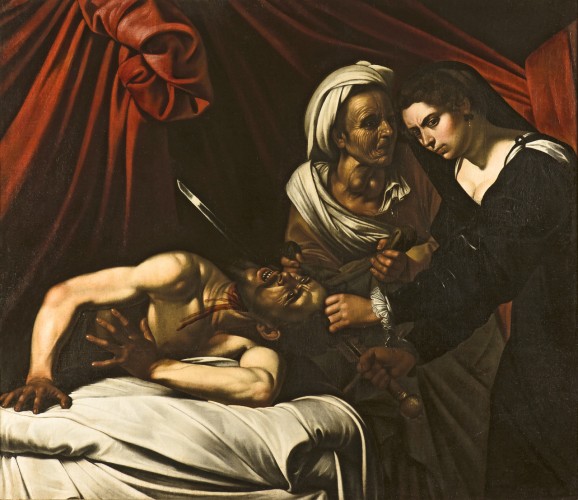
The first item on the docket is the contested Caravaggio, which Unraveling Musical Myths discussed in a previous post in April of 2016.

Starting this Friday, May 10, the recently discovered allegorical painting of Judith decapitating Holofernes, “Judith and Holofernes” (ca. 1607), found in the attic of a home in Toulouse in 2014 and later attributed to Caravaggio (which remains a subject of debate) will be making a week long pit-stop at the Adam Williams Fine Art Gallery (24 East 80th Street) before returning to Toulouse where it will be briefly displayed before being auctioned off later next month (at the Halle aux Grains, 1 place Dupay.)

This is a great time to view this stunning work of art up close - whether or not this piece is in fact a second go at this famous Old Testament tale by one of the most influential masters of the Italian Baroque/Renaissance or the work of another, incredibly gifted artist (some believe it to be painted by the brush of Louis Finson, who copied an original work)[1], it is worth making the trip to the gallery: the Louvre declined the acquisition of this piece back in 2016 (for budgetary reasons) and it is presently unknown with whom - or where - this controversial painting may wind up. This may be a once-in-a-lifetime visual experience for those U.S. bound.

If indeed a true Caravaggio, the c. 1607 Judith Beheading Holofernes would make the piece the 66th surviving work of the artist. Caravaggio's known work based on this scene from the Book of Judith was rediscovered in 1950 and is presently part of the collection of the Galleria Nazionale d'Arte Antica in Rome.

UPDATE: Judith Beheading Holofernes has been sold to a private buyer who intends to display the work in an as yet unrevealed "major" public gallery. The purchase occurred two days ahead of the painting's scheduled auction on Thursday, 25 June, 2019. Read more about the transaction here.

Visitors to Unraveling Musical Myths may recall my recommendation of Arma, Caedes, Vindictae, Furores from Vivaldi's Juditha Triumphans devicta Holofernes barbarie, performed by the great I Barocchisti and Coro della Radio Svizzera under maestro Diego Fasolis to accompany the enjoyment of this masterful work of art. I present it here again for those who missed it - never before have I heard a better interpretation of this movement in particular - it is simply an incredible rendition, from the blood-boiling timpani crescendo which opens the martial movement, to the rich tapestry of voices offered by the mixed choir.


Juditha Triumphans, save for it's overture, which has been lost to the hands of time, is Vivaldi's only surviving oratorio. It was originally scored for an all female cast (for performance by the women of the Ospedale della Pietà with which the composer was linked) and the biblical subject matter meant to serve as a metaphor for the Venetian victory over the Turks at the siege of Corfu in 1716.

As for the "Caravaggio," visitors to the Adam Williams Fine Art Gallery can expect to view the painting until May 17.

Exciting, admission-free events take a musical turn in late 2020, as the New York Public Library gets set to launch its very first permanent exhibition.

Residents of and visitors to New York will soon be able to
view, up close and in person, Mozart manuscripts, free of
charge, courtesy of the New York Public Library.
As yet unspecified, original sheet music in the hands of classical music titans Ludwig van Beethoven and Wolfgang Amadeus Mozart, among other historical items of interest (ranging from rare books and manuscripts to film, photographs and ephemera - even Thomas Jefferson's handwritten draft of the Declaration of Independence and a prized Gutenberg Bible) will make an appearance. Each acquisition will be hand selected from the NYPL archives. Previously accessible only to visiting scholars, the documents will be viewable on rotation in the 6,400-square-foot Gottesman Hall exhibition space (located in the Stephen A. Schwarzman building at Fifth Avenue and 42nd Street.)

The world of dance will not go unnoticed: a personal diary belonging to 20th century Russian dancer and choreographer/Parisian icon Vaslav Nijinsky of The Rite of Spring fame will also make the public round. 

It is all part of the Library's commendable initiative to "showcase the depth and breadth of the Library's holdings," according to Library President Tony Marx, who added that he hopes by allowing these formerly exclusive items into the open, it will "excite a new generation of researchers.”

In an age where digitization of composer manuscripts and memorabilia is rapidly becoming commonplace, a live, in person, physical manifestation of the musical past is an added - and much overdue - welcome.

The NYPL's much anticipated exhibition is the result of a generous $12 million donation from philanthropist Leonard S Polonsky's Polonsky Foundation.

Unraveling Musical Myths will keep you updated when the day of launch is formally announced.

I am celebrating these momentous occasions with a listen of David Deveau's reduction of Mozart's Piano Concerto no. 14 (presented below is the works' second movement, the "Andantino")


If you haven't already heard Deveau's charming rendition of Mozart's inaugural mature concerto, you are missing out on a truly unique listening experience. The pianist's collaboration with the Borromeo String Quartet recently released on the Steinway and Sons label made quite a buzz earlier this year and it's easy to see why.

Deveau has adapted the a quattro form by way of an added double bass (performed by Thomas van Dyck of the Boston Symphony Orchestra) to enhance the (chamber version) of Mozart's Concerto while keeping intact the composer's original cadenzas. It was not uncommon in the age of Mozart, with the era's rapidly expanding subscription concert sector, for popular works to be adapted for play in the private home with a small ensemble. Over a dozen of Mozart's concerti (nos. 1-14) served as ideal models for performing "a quattro" - that is, in a transcribed version for soloist and string quartet.

Deveau's intimate recording takes us back to this time - in the age before radio and televised broadcasts - into the private salons of the musical 18th century Viennese.

Footnote:
[1] Louis Finson (Ludovicus Finsonius) was a known acquaintance of Caravaggio and has been documented to have been in possession of several of the master's paintings, and known to have painted copies of Caravaggio's originals.

Some scholars believe this to be a variation on his ca. 1607 "Giuditta decapita oloferne" (seen below) after an original, since lost, second depiction of this scene by Caravaggio. It should be noted, however, that the 1607 work to Finson is also an attribution.

Finson's (attr.) Giudetta decapita Oloferne:

-Rose.

Sunday, 5 May 2019

TCHAIKOVSKY'S ENTIRE OEUVRE NOW AVAILABLE ONLINE AS COMPLETE WORKS ARE DIGITIZED feat. Did You Know?

Tchaikovsky's entire oeuvre has been digitized. Access the archive here.
Add the iconic Russian composer Pyotr Ilych Tchaikovsky to the growing list of composers who joined the digital age long after death.

Representatives of the Pyotr Tchaikovsky International Charitable Foundation and Muzyka Publishing House recently announced the digitization of the complete works of the 19th century romantic icon, which are presently available in the composers' native tongue on the Foundation's website - a version in English is set to follow later this year.

The virtual treasure trove of scores are derived from both scholar and composer submissions which had been entered into a 63 "fundamental edition" volumes published by the Muzyka Publishing House over some five decades, beginning in 1940 and concluding in 1990.

The digitization process was both a massive and laborious undertaking – over the span of “several years” experts scoured over each and every one of the 63 volumes of collected works for any errant inaccuracies, and, where necessary, restored and cited their corrections.

Speaking through the organization's press service, Foundation President and General Director of Muzyka publishing Mark Zilberkvit referred to the project as one which bears a “significance of which [it] is difficult to overestimate.” “It is important,” he continued, “that the complete works appear in the public domain. Now all professionals and amateurs can access the music."

The archive may be accessed here.

Listen below to the Münchner Philharmonie perform the gorgeous andante cantabile of Tchaikovsky's 5th Symphony (op. 64 in E minor) conducted by maestro Celibidache (movement 2 begins at 18:42):


Did You Know?


Pyotr's younger brother
Modest provided a source
of comfort for the often
melancholic composer to
air his grievances.
As undeniably stunning as Tchaikovsky's 5th is, the composer had not thought of commencing work on writing a new symphony until the spring of 1888, some ten years following a period of apathetic self-doubt following the disastrous 1878 premiere of his 4th symphony, which had been widely critically panned.

Pyotr first made mention of his intention in letters to his brother Modest and benefactress/confidante Nadezhda von Meck to spend the spring and summer months of 1888 composing at Frolovskoye, just outside of Kiln. A sense of personal vacillation during this process had not evaded him, and was clearly evident in his correspondence to Modest and Frau von Meck, in which the composer flip-flopped between perspectives, both pessimistic and optimistic.

On the 27th May 1888, he wrote to his younger brother:


“[it's now] mid/late May, [yet] I've still not yet made a start, because I've been working on various proofs. But I can honestly say that the urge to create has deserted me. What does this mean? Am I really written out? I've no ideas or inspiration whatsoever!"

This was followed three days later with a soupçon more hope: 


"Now I am gradually, and with some difficulty, squeezing a symphony out of my dulled brain." 

By the 22nd of June, Pyotr would lament in an exchange with the patroness von Meck that “inspiration” had “deserted [him] completely."

After toiling for some three months, Tchaikovsky had at last found himself humbled by his work, telling the benefactress: 


“Now, as the symphony nears its end, I can view it objectively, and at the culmination of the work I must say that, thank God, it is no worse than my previous ones. This accomplishment means a great deal to me!!"  

Pyotr even went so far as to later proclaim 

“My symphony is ready, and I think that I have not miscalculated, that it has turned out well."

Critical feedback for Tchaikovsky's 5th was swift, and very much mixed: whilst praised by those in the composer's inner circle following the Moscow premiere in December 1888 (which the composer himself conducted – the first orchestral performance having been held in St. Petersburg one month prior) as possibly his “best work," the demand for the symphony was wholly underwhelming back in St. Petersburg and in Prague, where a mere three performances were held (twice in the Russian Imperial capital and only once in the Czech republic) prompting Tchaikovsky to lament his misfortune in a letter of characteristic self loathing to von Meck:


"With each day that passes I am increasingly certain that my last symphony is not a successful work, and the realisation that it is unsuccessful (or perhaps that my powers are declining) is very distressing to me. The symphony is too colourful, massive, insincere, drawn out and on the whole very unsympathetic... Am I indeed, as they say, written out?... If so, then this is terrible. Whether my misgivings are mistaken or not, regrettably I have concluded that the symphony written in 1888 is poorer than the one written in 1877."


It would take a successful performance in Hamburg in March of 1889 to sate Tchaikovsky's doubts as to his compositional ability (and of his reservations regarding beauty of the 5th itself.) He quietly raved over the concert in exchanges with both Modest and his trusted nephew, Vladimir Daydov:


"The musicians took to the music more and more each time the symphony was played. At rehearsals there was general enthusiasm, flourishes, etc. The concert also went excellently. As a result, I no longer have a bad opinion of the symphony, and like it once more... The Fifth Symphony was again performed magnificently, and I have started to love it again; my earlier judgement was undeservedly harsh..." 


Theodore Avé-Lallemant
Perhaps aiding in Tchaikovsky's change in perception lay in the encouragement of the works' dedicatee - Pyotr dedicated his 5th to Theodore Avé-Lallemant, then Chief Director of the Philharmonic Society, of whose acquaintance the composer first made shortly after his arrival in Hamburg in January 1888, where the composer was scheduled to conduct a concert of his own music at the Philharmonie (the program included his Serenade for String Orchestra, the Piano Concerto No. 1 and the Theme and Variations from Suite No. 3.) Herr Avé-Lallemant, who was known for his criticism of much of Tchaikovsky's oeuvre, was nevertheless so bowled over by Tchaikovsky's potential (as a potential future "German" composer), that he made arrangements for a private meeting with Pyotr two days following the performance, to be held in his home, where he surprised Tchaikovsky with a request that the composer emigrate to the country.

Writing in his memoirs, Tchaikovsky recalled the moment he received the unexpected request:


"First of all I should mention the chief director of the Philharmonic Society, the aged Herr Avé-Lallemant. This most venerable old man of over eighty paid me great attention and treated me with paternal affection. In spite of his age and frailness, as well as the long distance from his house, he attended my two rehearsals, the concert, and even Dr Bernuth's reception [after the concert]. In his extraordinary kindness he went so far as to request some photographs of me, which were to be taken by the best photographer in Hamburg. He even called on me to ask about this and arranged an appointment when I could pose for the photographer, as well as deciding on my behalf what size and format the photographs should be produced in. When I then visited this kindly old gentleman, who passionately loves music and who, as should be obvious to the reader, is quite free from that aversion which many old people have against everything that has been written in recent times, I had a very lengthy and interesting conversation with him.

Herr Avé-Lallemant openly confessed that there was a lot in those works of mine which had been performed in Hamburg that wasn't to his liking; that he could not stand my noisy instrumentation; that he hated some of the orchestral effects which I resorted to (especially with regard to the percussion), but that all the same he saw in me the makings of a good, truly German composer. Almost with tears in his eyes he exhorted me to leave Russia and to settle permanently in Germany, where the classical traditions and the general atmosphere of a higher culture would not fail to correct me and rid me of those deficiencies which he felt were easily accountable by the fact that I was born and grew up in a country which was still so unenlightened and backward when compared to Germany as regards progress.

Evidently, Herr Avé-Lallemant harbours a deep prejudice against Russia, and I tried as far as I could to mitigate his hostile feelings towards our country, which, incidentally, this venerable Russophobe did not actually express openly, but merely allowed to shine through in his words. We parted as great friends."

Unfortunately for Tchaikovsky, the warm reception awarded the composer following the performance at the Hamburg Philharmonie in March the following year (which the composer himself also conducted) went un-witnessed by the director, who had taken ill and was thus unable to attend the concert.

-Rose.

Friday, 8 March 2019

WOMEN IN MUSIC: (RE)INTRODUCING MADDALENA LOMBARDINI - SINGER, COMPOSER, VIRTUOSO VIOLINIST, MOVER & SHAKER OF THE CLASSICAL ERA

Bust of Terpsikhore, Greek goddess of choral song and dance


(RE)INTRODUCING MADDALENA LAURA LOMBARDINI (*teaser post only - I remain on a brief hiatus. Full length articles will return shortly)

MADDALENA LAURA LOMBARDINI
Who she was: a Venetian-born noble who studied at one of the four Ospedali Grandi which trained orphaned girls in music. Regarded as a child prodigy in both singing and on the violin.

When she thrived: mid-late 18th century.

Claim to fame: violin concerti – including a double violin concerto co-written in 1768 with her famous husband, the renowned violinist Ludovico Sirmen. Lombardini did not ride on her partners' coattails, however. Three years following the much admired premiere of the couple's concerto, Lombardini debuted her critically acclaimed  "Concerto on the Violin." It was a performance that would solidify her new status as both a virutosic performer and formidable composer in her own right. She also occasionally performed as a singer.

Admired by: many established violinists and composers, including Quirino Gasparini. Most notably Giuseppe Tartini, who wrote, especially for Lombardini, an epistolary lesson on violin playing. That letter, vouching support and a personal relationship with one of the leading violinists of the era, only added to Lombardini's credit as a top performer and virtuoso. It would be widely published and disseminated (in multiple translations) throughout Europe in the mid-late 18th century.

Why you should listen to her: if you enjoy music from the classical era, in addition to virtuosity. In appreciation of the historical aspect of an independently successful female composer, famous in her own right, one who enjoyed the distinction of touring Europe as a performing composer – a rare privilege for her sex in her era.

Author's choice: Violin Concerto no. V in B Flat major


-Rose.

Wednesday, 6 March 2019

MUST HEAR: BRUCH'S DIE LORELEY


I am on a brief hiatus - I will be returning soon!

In the interim, enjoy some stunning Bruch:


Listen below to the stunning “Ave Maria”* from act I of Max Bruch's early (and much neglected) opera, "Die Loreley," performed live from the Theater Oberhausen in 1984 by the Chor des Theater Oberhausen and Kammerchor Orchestra under Antoni Wicherek.

Die Loreley - so named after the beautiful Rhine Maiden whose siren call and lusty locks (according to legend) famously 'ensnared' hordes of enraptured sailors to their deaths as they navigated waters about the Lorelei cliff, on which the spectre of the long-haired bombshell was said to sit, combing her luxurious hair some 433 feet above the 65 km stretch of River between Koblenz and Bingen in Germany.

Bruch's 1863 opera, originally intended by the works' librettist, Emanuel Geibel to be set to music by Felix Mendelssohn, closely draws on the legend of the maiden “Lore Lay,” a fable first coined in 1801 by the German author Clemens Brentano through his ballad “Zu Bacharach am Rheine” (later adapted by Heinrich Heine), with the Rhine Maiden Loreley (in Bruch's opera a poor daughter of a ferryman called Leonore) exchanging her soul with the spirits of the river (and it's highly conspicuous rock) in an effort to wickedly ensnare the wealthy, noble object of her affection - who had jilted her - though her silvery-toned singing. The work, composed by Bruch at the tender age of twenty, achieved brief success following its premiere in Mannheim, and was later revived in 1887 (via the composers' revised edition) under the baton of Gustav Mahler. It has since, like so many other great operas, fallen into obscurity.

In fact, it was not until late 2018 that a full recording of Die Loreley was made available on CD, with the Münchner Rundfunkorchester and the Prager Philharmonischer Chor performing under Stefan Blunier.

That recording, taken from a live performance at the Prinzregententheater in Munich in 2014, can be purchased online here.

*"Ave Maria" runs from 19:27 - 22:59. Katarzyna Niemiec sings the role of Leonore.


-Rose.

Monday, 18 February 2019

THE ILLUSTRIOUS JESSYE NORMAN TO BE HONORED WITH GLENN GOULD PRIZE WEDNESDAY IN TORONTO

It is the gala event of the season: a star-studded concert and award ceremony presented by the Glenn Gould Foundation and the Canadian Opera Company (COC) will award, this Wednesday, February 20, the prestigious Glenn Gould Prize – the Canadian Foundations' biennial highest honor in recognition of extraordinary artistic and humanitarian contributions to the arts - to American opera legend Jessye Norman.

The beloved septuagenarian proved a dominating force on the operatic stage throughout much of the the 20th century, (and later as a sought-after recitalist) beginning at the Deutsche Oper Berlin in 1969 as Elisabeth in Richard Wagner's Tannhäuser.

Norman's vocal range, in it's prime, proved so expansive the diva's voice type - commonly described as a dark, lush, dramatic soprano – was considered by many vocal experts (and remains still), as undefinable: a perfect compliment to the barricade-smashing diva's insistence on not being "pigeon-holed" in the press.

The 73 year old African-American powerhouse will accept the prestigious award as it's 12th recipient Wednesday evening on the stage of Toronto's Four Seasons Centre for the Performing Arts by Jury chair and American actor Viggo Mortensen during a special gala concert honoring the singer in which Norman's renowned colleagues – including fellow operatic legend Nina Stemme - are slated to perform alongside the COC Orchestra. The entire affair is scheduled to begin at 7:30 pm.

Norman will add the Glenn Gould Prize - whose past recipients include Chinese-American cellist Yo-Yo Ma, Canadian singer/songwriter and poet Leonard Cohen, and minimalist composer Philip Glass - to an already impressive array of past honors which include, but are not limited to, France's Legion d'honneur, awarded to the songstress in 1989; the American National Medal of Arts, the nation's highest honor given to artists and patrons, bestowed to Norman in 2009; and the Kennedy Center Honors - then as the youngest recipient in its history, awarded to Jessye in 1997.

There remains, at the time of writing this post, a chance to score seats for this once-in-a lifetime event.

For details and to purchase tickets, visit glenngould.ca.

Watch below an inpromptu performance by Norman singing Elisabeth's Greeting (Dich Teure Halle) from the opera that launched her critically acclaimed career - Richard Wagner's Tannhäuser:


External Links:


UPDATE - SEPTEMBER 2019 The family of Jessye Norman have announced in a statement to the Associated Press the passing of the legendary singer in a New York hospital on 30 September, 2019 due to secondary complications resulting from a major spinal chord injury sustained by the icon in 2015. Norman was 74.

Rest In Peace, maestra.

-Rose.

Wednesday, 6 February 2019

RARE OPERA BY SCARLATTI TO RECEIVE FIRST MODERN-DAY PERFORMANCE AT ISABELLA STEWART GARDNER MUSEUM SUNDAY

Alessandro Scarlatti
Boston's famed Isabella Stewart Gardner Museum – home to the largest unsolved and most infamous major art heists in history – is to play host to what is believed to be the first modern staging of 17th century Italian composer Alessandro Scarlatti's 1697 3-act dramma per musica “La Caduta de'Decemviri,” performed by the period ensemble known as ACRONYM and a young operatic cast featuring countertenor Daniel Moody.

The opera, which set in ancient Rome, details the plight of the Plebeian Verginia (Virginia) – made a political pawn through the duplicitous machinations of the Appio Claudio (Appius Claudius) and his ruling counterparts, the Decemvirs (a ten-man committee chosen to draw up Roman law) – after she rejects the former's advances.

Whilst the opera has remained until now, unstaged in any modern venue, the score itself was published by Harvard in 1980 in a compilation of the composer's operatic works. La Caduta... is the first of several collaborations between Scarlatti and librettist Silvio Stampiglia.[1]

The performance at the Museum will serve to draw further attention to a recent, temporary acquisition on the same subject via the arrival of Botticelli's “Story of Virginia,” scheduled to arrive from Bergamo's Accademia Carrara four days following the premiere, on Valentine's Day, to be included in the Gardner's forthcoming exhibition on the artist, "Botticelli: Heroines + Heroes" (which runs from 14 February until 19 May, 2019 in the museum's Hostetter Gallery.) The impending arrival marks the first time the master's “Story of Virginia” has set foot on U.S. soil.

The Story of Virginia by Italian Early Renaissance master Sandro Botticelli, 1500-1504


The latter event is being heavily touted by the museum as a multi-layered historical event – not only is the first modern performance of Scarlatti's opera - itself based on the same subject matter as Botticelli's never-before-seen-in-America masterpiece a major coup for the Gardner – it marks the first time Botticelli's painting will “reunite” with the master's “Story of Lucretia,” acquired by Isabella Stewart Gardner herself in 1894, who subsequently brought the painting to Boston – in effect, introducing into the United States the nation's very first Botticelli.

Listen below to the overture of Scarlatti's La Caduta, performed by the period ensemble Charivari Agréable:


Footnotes:
[1]Stampiglia provided libretti for eight of Scarlatti's operas, including L'Eraclea (1700), Tito Sempronio Gracco (1702), Turno Aricino (1704), Lucio Manlio L'Imperioso (1706) and L'amor Generoso (co-librettist, Giuseppe Papis, 1714.)

For further information on the exhibit "Botticelli: Heroines + Heroes," or to purchase an exhibition catalogue, visit www.garndermuseum.org

-Rose.

Wednesday, 23 January 2019

PERMANENT EXHIBITION AT MOZARTHAUS AUGSBURG, FESTIVAL, NEW BIOGRAPHY ON LEOPOLD MOZART TO COMMEMORATE 300TH ANNIVERSARY OF COMPOSER'S BIRTH

Cover of Leopold Mozart's Violinschule (1st ed.), depicting
the musician with his instrument. Leopold taught violin to
his famous son, Wolfgang Amadè from an early age,
effectively becoming the boy's first teacher. He would
famously take Wolfgang on a series of tours, and is rightly
considered to have been an indispensable figure & a dominating
force in the shaping of his sons' musical genius, and played
a major role in the formation the latter's stratospheric rise to
success, both as a performer and as a composer.
The “Mozarthaus Augsburg” - birthplace and home of Leopold Mozart, born in the Bavarian residence on Frauentorstraße on 14th November 1719 and father to more famous Wolfgang - is gearing up for an autumn re-opening with a fully redesigned, all new, permanent exhibition honoring the composer following a year's worth of renovations, and just in time for the Augsburg native's 300th birthday.

Speaking to the German press, culture adviser Thomas Weitzel invites fans of the Mozart family clan to pay pilgrimage to the newly renovated museum and exhibit this Fall, which promises to “focus on interactive approaches and music education” - providing a perfect learning environment suitable for “younger target groups.”

The cost of the overhaul to the Mozarthaus is estimated to be in the range of 300,000 euros, 264,000 of it to come from the state office for the non-state museums in Bavaria and the remaining sum to be paid by a group of third-party donors and sponsors who have pledged their financial support.

In addition, the city of Augsburg will play host to a celebratory year long anniversary program "JUBILEO! - 300 years of Leopold Mozart" which will feature theater and dance productions, choral and orchestral concerts, guided tours and exhibitions, culminating in May 2019 with the “German Mozart Festival.” The latter festival, which runs from the 11th of the month through to the 26th will play host to six exclusive concerts and feature as its main attraction the 10th Leopold Mozart International Violin Competition, which will be held in the German city 31 May through 8 June 2019. 

Mozarthaus Augsburg exterior, not to be confused
with Mozarthaus in Wien, located at
Frauentorstraße
30, is the birthplace and former residence of father
to Wolfgang Amadè Mozart, Leopold Mozart.
Finally, a festive birthday concert on the occasion of Leopold's birth, on the 14th of November is sure to draw a crowd.

The celebration, however, doesn't end there: the Bavarian Chamber Philharmonic (Bayerische Kammerphilharmonie) has been commissioned by the city of Augsburg for a newly recorded CD of works by Leopold, which will hit the market following the jubilee.

As many violinists well know, Leopold's Treatise on the Fundamental Principles of Violin Playing (Versuch einer gründlichen Violinschule) – the famously influential instructional textbook on 18th century performance practice for the violin - and the methods contained within, have been experiencing a welcome renaissance in present times thanks to the surge of historically-informed performances of music dating from the classical era. As such, Leopold continues to educate, and to inspire.

So much so, that a new biography on Mozart's first teacher is slated for release this fall by German musicologist Silke Leopold. The much anticipated write-up on Mozart's erudite father is being touted in the German press as the “first biography [on Leopold Mozart] to be backed by scientific evidence” and promises to shed new insight into “Leopold's European mindset” as well as his undeniable influence in the shaping of his son's stratospheric success, which the biographer dubs “The Miracle of Mozart.”

Unraveling Musical Myths will provide an update when Leopold's biography is expected to release.

Enjoy below recordings of 7 Symphonies of Leopold Mozart, performed by the Slovak Chamber Orchestra under maestro Bohdan Warchal (list in video):


External Links:

-Rose.

RUSSIAN-BORN VIRTUOSO PIANIST DANIIL TRIFONOV TO PERFORM CHOPIN ON THE MAESTRO'S OWN INSTRUMENTS IN FORTHCOMING FILM ADAPTATION OF PAUL KILDEA'S CHOPIN'S PIANO: A JOURNEY THROUGH ROMANTICISM

Paul Kildea's Chopin's Piano: A Journey
Through Romanticism (also published as
Chopin's Piano: In Search of the
Instrument That Transformed Music, 2018,
soon to come to Unraveling Musical Myths
Book Reviews, to see film adaptation.
Purchase Kildea's title now on Amazon
A forthcoming film adaptation of Australian conductor/author Paul Kildea's acclaimed 2018 novel (pub. Allen Lane) Chopin's Piano: A Journey through Romanticism has recently been announced.

The film, which begins production in 2020, produced by Donald Rodenfeld and Andreas Roald at Sovereign Films, will make use of two pianos which originally belonged to the famed Polish musician - a rare boon courtesy of the kind permission of Hatchlands Park, a Georgian National Trust property in Surrey, England which houses a collection created by Alec Cobbe, with roots dating back half a century.

Both novel and film bring into focus the composers' turbulent and highly creative time spent at an abandoned monastery in Mallorca with famed lover and French novelist George Sand in 1838, in which an ailing Chopin, surrounded by the “most beautiful” inspiration created his much beloved 24 preludes using a pianino – a small piano the composer had fashioned by a local, unknown amateur craftsman (Juan Bauza) upon finding a lack of instrumentation at the monastery. The film will also trace the subsequent history of the pianino long after Chopin's death – seized from the possession of Polish pianist Wanda Landowska at the height the second world war by Nazi officials in the latter's bold attempt to claim the composer as their own.

Unfortunately for posterity, Chopin's “Bauza” pianino has been lost to the hands of time, however Cobbe's collection, which includes the Pleyel Grand Chopin brought with him to England (and later used during a recital at the home of the Count d'Orsay and the Countess of Bessington at Kensington Gore), and a Broadwood which the maestro played at London's Guildhall (effectively the last of the pianist's concerts, held 16 November 1848 in honor of the “Funds of the Literary Association of the Friends of Poland”) and at various recitals. Both are expected to be featured in the upcoming film.

The role of Chopin – if already selected – has yet to be announced, whilst Oscar-winner Cate Blanchett is reportedly being eyed for the role of Sand.

Listen below to Daniil Trifonov performing Chopin's 24 Preludes during a recital at Berlin, held 8 May, 2013:


-Rose.

Tuesday, 22 January 2019

NEARLY HALF A YEAR AFTER QUIETLY HITTING REAL ESTATE MARKET, IGOR STRAVINSKY'S WEST HOLLYWOOD HOME REMAINS UNSOLD (UPDATED)

Igor Stravinsky loved and lived the Hollywood high life,
spending some 29 years of his life in Tinseltown. 20 of
those years were spent residing at the property presently
up for sale by Coldwell Banker. View the property via the
online listing at Redfin: 1260 N Wetherly Drive, Los Angeles
After being listed for 167 days (at the time of writing this post) on Redfin, Igor Stravinsky's West Hollywood home remains on the real estate market. The quaint 2,612 square foot estate (with 3 bedrooms and 4.5 bathrooms), located at 1260 N Wetherly Drive, just above L.A.'s famed Sunset Strip was the longtime U.S. home of the famed Russian-born composer, who moved into the property in 1941 nearly a year after his arrival on the West coast, then fresh off the heels of his marriage to longtime mistress Vera de Bosset (former wife of famed Russian painter Sergey Sudeikin).

Stravinsky, who would obtain American citizenship five years after his arrival on US soil, clearly bore affection for both Hollywood high life and home: in fact, the beloved 20th century icon – then revered as much in the United States as he was in Europe – would spend more years of his life in The Golden State than anywhere else in the world. Wetherly Drive, in particular, would prove more than agreeable: Igor would famously later purchase a neighboring home on the same street (#1218 N Wetherly Drive) after some 20 years spent at the primary residence – he would live on the adjacent property for over 9 more years before heading Northeast, where he would relocate to New York to live out his final two years, spent in the city's iconic Essex House, which had been recently acquired by Marriott Hotels in 1969.

Stravinsky boasted a remarkably productive output during his years spent at 1260 N Wetherly Drive (which include, but are not limited to the maestro's adoption – and adaptation – of Austrian émigré Arnold Schoenberg's 12-tone technique; the composition of 1951 English-language opera “The Rake's Progress” based on the engravings of William Hogarth; a collaboration with the illustrious choreographer George Balanchine on “Agon;” and his single-handed influence on reviving the early music of Carlo Gesualdo through his poignant arrangements of three of the renaissance master's madrigali for orchestra (which were later incorporated into Balanchine's ballet Momentum a Gesuado – not to mention a completion of the murderous Italian's unfinished Tres Sacre Cantiones Liber Secundus, which Igor realised in 1956; in addition to arrangements of the works of Tchaikovsky, Sibelius, and a bold excursion into ethereal liturgical works following the maestro's increasing presence and deep interest in the Russian Orthodox Church).

Listen below to Stravinsky's arrangement of Gesualdo's "Sacrae Cantiones Liber Secundus." Stravinsky realised this work in 1957 (I) and 1959 (II & III), of which the original sextus and basses part books were lost. The video below is in a playlist format, containing three videos. Use arrow buttons or menu to navigate. I. Da pacem Domine, II. Assumpta est Maria, III. Illumina nos:


Stravinsky seemed to fit right in as an esteemed member of the Hollywood elite - he hobnobbed with film industry bigwigs – famously signing over rights to Walt Disney for the American magnate to use music from Le Sacre du Printemps for the 1940 blockbuster animated hit “Fantasia” (albeit for a rather paltry sum of $6000 USD) – and proved a giant among men among Tinseltown's illustrious artistic intelligentsia. Those in his inner circle included everyone from Surrealist maestri to great thinkers, poets and authors – the likes of Aldous Huxley, Dylan Thomas and W.H. Auden. 

Just prior to moving into the property at N Wetherly Drive, Igor would try his hand at composing for film (though somewhat unsuccessfully - not for lack of talent, but rather for a refusal to relinquish sole control) with trial music for the former's screenplay adapted to the film “Jane Eyre,” starring Orson Welles (he ended up recycling previously written music for the project instead).

Even the pop culture sphere opened it's doors for the world's most famous living composer: Stravinsky would make his Hollywood Bowl conducting debut the summer of his arrival in the U.S. in 1940 in which he led a rousing performance of the Firebird Suite.

These mentions account for merely a small portion of the maestro's accomplishments achieved in West Hollywood. Yet for all of Stravinsky's many connections in Los Angeles, and for all of his efforts at re-inventing himself both musically and spiritually, the only relic left standing – nay, the only relic to have ever stood - which would serve to both remember and celebrate the beloved icon's time and influence in the city (save for a star on the Hollywood Walk of Fame) remain the former Stravinsky family homes on N Wetherly Drive – of which the aforementioned residence presently offered up for sale is one (a true injustice of the highest sort!)

The fact that the property is being quietly listed online with merely a passing reference to the composer is but another unfortunate reminder of a sadly seemingly absent memory on behalf of the inhabitants of the city.

Absent – yet not forgotten. In the nearly half a year since the quaint white stucco and wood home has been on the market, at least one active musician has paid pilgrimage to the composer by attending an open house and walking among its hallowed walls.

Could this small gesture be a promising sign of a much-delayed turnaround in WeHo to finally honor the internationally beloved icon who once called the city home, and whose contributions to Tinseltown's artistic realm have permeated the seams of time – the music composed there continuing to influence legions of subsequent composers both at home and around the globe?

Be it as a converted tourist attraction/education site (a museum would probably be asking too much), as a modern-day “salon,” or as home to a present or future musician or patron of the arts – or even simply as a residential slice of heaven for a very lucky fan – the possibilities for Stravinsky's house on the hill are infinite.

The present asking price for the property is $3.75 million USD. The listing may be viewed online on Redfin.

Related: watch below the acclaimed documentary, "Stravinsky in Hollywood," (dir. Marco Capalbo) which details the exploits and works composed whilst residing in the city (in three parts, L-R-BL, followed by the critically acclaimed autobiographical documentary "Once at a Border," featuring rare footage of Stravinsky and interviews many of his illustrious colleagues and family detailing more broad aspects of the composer's life. Directed by Tony Palmer):


Did You know?

This is not the first time Stravinsky's former home at 1260 N Wetherly Drive has hit the real estate market. Finnish conductor Esa-Pekka Salonen expressed interest in purchasing the property in 1996 only to pass given his fear of being haunted by the “ghost” of Igor, after he noticed indentations on the carpet where the maestro formerly rested his piano, and humorously, the hook where Stravinsky tethered his pet goat.

In other related news:
 
 
Giovanni Paisiello's former home in Taranto scores 500,000 euros to convert into museum honoring composer.

View that story at La Ringhiera (in Italian): "Regione, 500mila euro per il restauro di casa Paisiello a Taranto"


Vincenzo Bellini's Former villa overlooking Lake Como (the Villa Passalacqua) to open up this year as an idyllic sojourn for overnight guests.

View this story at Forbes online: "You Can Now Book A Night At One Of Europe's Most Expensive Homes."


UPDATE - 3 JANUARY 2020:
The former Stravinsky home, located at 1260 N Wetherly Drive has now been sold, according to the updated listing on Redfin.


-Rose.

Sunday, 20 January 2019

TRUNK CONTAINING HITHERTO UNPUBLISHED LETTERS AUTHORED BY VERDI “SEIZED” FROM HEIRS, PARMA TO HOLD DOCUMENTS INDEFINITELY DUE TO FAMILY'S “FAILURE TO COMPLY WITH CONSERVATION OBLIGATIONS” + LONG AWAITED REVEAL OF OVER 5000 NEVER-BEFORE-SEEN AUTOGRAPHS

Giuseppe Verdi strolls down the Piazza della Scala, reading the news, 1900
As we approach the 118th anniversary of the death of 19th century Italian composer Giuseppe Verdi, observed January 27th, the surviving descendants of the beloved icon residing on the grounds of his former home in Parma (the “Villa Verdi”) will find themselves feeling significantly less full – if not in spirit, in endowment – after failed attempts to reclaim hundreds of letters authored by the composer from the National Institute of Veridian Studies following it's digitization of the documents into the Parma State Archives left the family without the historic relics for the first time in over a century.

The presence of hitherto unknown correspondence in the hand of Verdi in the composer's former home, (located in the village of Sant'Agata near Piacenza, some 45 miles south of Milan) was first announced in the international press in the early Spring 2017. The documents, which date from 1850 to the year of Verdi's death in 1901, had formerly lay encased in a late 19th century trunk built by Marshall Field & Co. in Chicago for some 116 years at the location, which has remained until present day the Carrara-Verdi family home. Both trunk and its contents had been transferred at the start of the year (January 10) to the Parma State Archive to be digitized under the auspices of a pro tempore exchange.

But some three months later, and with no return of the memorabilia on the horizon, the good-faith exchange would turn sour, and with present villa owner and great-great grandson to the composer, Angiolo Carrara Verdi citing the transfer as little more than an unjustified “raid” by the Italian government.

Carrara-Verdi had inherited the villa - and all of the property within it - through the family line of Giuseppe's late cousin, Maria Filomena Verdi, who the composer and his opera-singer wife, Giuseppina Strepponi had raised as a daughter. Giuseppe, who died without any (direct) surviving children of his own (two children - a daughter and a son - had died in infancy) had left the vast bulk of his estate to Maria Filomena. Verdi's adopted kin would go on to marry one Alberto Carrara - the son of the composer's notary, Angiolo. The property, and all of Verdi's possessions contained within, have remained in the family ever since.

The "Villa Verdi" - Verdi's forever home at Sant'Agata.
Verdi moved into the residence in 1851 with
then-lover Giuseppina Strepponi. The couple would
wed eight years later and go on to raise Giuseppe's young
cousin Maria Filomena as their daughter. Verdi would
bequeath the villa to his adoptive daughter in his will,
dated 14 May, 1900. It has remained in the family ever
since, in conjunction with the Carrara family, descendants
of Filomena's husband (and son to Giuseppe's notary),
Alberto Carrara. Its present owner is Angiolo Carrara-
Verdi, the great-great grandson of Giuseppe.[1]
By April, a full blown press conference was organized in Rome at the Headquarters of the Central Institute for Audio and Audiovisual Assets led by the General Director for the Archives of Ministry of Cultural Heritage Gino Famiglietti, in which accusations of withholding “missing” letters were levied against the Carrara-Verdi family.

Furthermore, the heirs were branded as having been negligible in their conservation efforts of the letters by exposing them to unsuitable levels of environmental moisture, causing damage due to a damp atmosphere. Famiglietti informed the press that a six month “restoration” of “previously unusable” documents would be required for preservation's sake due to extensive damage before digitization of the material could even commence – a move that will ensure the full breadth of the correspondence will be made readily available for scholars.

Famiglietti emphasized that the delivery of the documents by the heirs had been conducted consensually with the Ministry from Angiolo Carrara Verdi, however it should be noted that had the composer's heirs not been compliant, there had been reason to believe a lawful, “coercive delivery” would have been enforced by the ministry in its efforts to “verify the preservation and consistency of archival assets, even if in possession of private individuals.”

The debacle resulted in a parliamentary dispute – between villa-adjacent Piacenza and Parma, with Piancenza Parliamentarian Tommaso Foti proposing a resolution (n. 5301 in the Regional Council of Emilia-Romagna) for the return of the documents following their digitization – which passed in September 2017. Foti argued the family villa was “subject to the constraints of the Ministry of Cultural Heritage which has enshrined the inseparability of the aforementioned Villa and the assets contained therein."

That reminder proved anything but helpful as inspectors of the Archival and Bibliographic Superintendency of Emilia-Romagna conducted their own survey of the villa grounds on 7 May 2018 only to substantiate claims of an inadequate conservation of the “Carteggi Verdiani” (Letters of Verdi) and ordered the mandatory transfer of the documents to Parma.

The Undersecretary of State for Cultural Assets and Activities, Gianluca Vacca seemed reluctant to criticize the family, citing the mandatory transfer and indefinite hold of the assets in Parma as an exercise in overabundant caution, whilst simultaneously reporting on damning inadequacies at Villa Verdi, including a persistent issue in regard to a lack of security on the grounds. Vacca noted that some documents had been stolen from the premises unbeknownst to the Carrera-Verdi family, and that the aging relic lacked a suitable fire-extinguishing system. That same month the General Directorate “gave immediate provisions for the purpose of coercive custody of the 66 archival units present at Villa Verdi.”

Vacca's statement went on to read:

“[the transfer of the letters to Parma] are not meant to persecute the family, but rather it is opportune to reiterate that this precautionary measure, fully justified by the conditions found during the inspection, [which] was put in place with the objective to guarantee the security and proper preservation of Verdi's documents, and not with a punitive intent towards the Carrara-Verdi heirs; without prejudice to the fact that, as mentioned above, they have on several occasions and in various forms disregarded the conservation, inventory and consultation obligations to which owners, owners or holders of cultural assets are kept ...

it should be added that the physical characteristics of the archival materials require specific microclimatic conditions for conservation purposes, and conditions [in] both the rooms of Villa Verdi, and the furnishings in which the documentation was kept could not in any way guarantee the desired [intent] to preserve Verdi's documentation in the rooms... the villa can not be led to the extreme consequence of jeopardizing the material integrity and the survival of the letters.”

What is perhaps most ironic is a directive rumored to be scrawled on one of the hitherto unpublished letters in the hand of Verdi: “Abbruciate tutte queste carte!” (Burn these letters!) How little did the composer know that the very same letters he once ordered destroyed after his demise (yet preserved against his wishes) would ignite a fire that would continue to burn well over a century after his death.

The present documents are likely to be housed at the Palatine Library of Parma, to be added to correspondence previously acquired by the Ministry through London auctioneer Sotheby's.

This marks the first time in the Villa's history as a museum that conditions related to conservation has been challenged.

More on this story at @ piacenzaonline (in Italian)


In happier news (for scholars, perhaps not as much for Carrara-Verdi) it has recently been announced that come this January 29, 2019, a much anticipated reveal of some never-before seen 5434 autograph pages of Verdi – which include “changes, corrections and uncertainties” written in the composers hand to his own scores, in addition to notes, each separated into envelopes housed in the large trunk – will be presented in the form of a yearbook by compiler Sandro Carrelletto of the Institute of Veridian Studies. The documents contained within are invaluable to scholars of the composer as they detail the intimacies of Verdi's composition process, and offer never-before heard versions of famous operas such as Falstaff, Ballo in Maschera; and include modification, notes and on-the-fly corrections from all of the composers' masterpieces, from La Traviata to Rigoletto, Aida to Don Carlos, and even Luisa Miller to his choral collective Quattro pezzi sacri.

The reveal comes after a three-year long petition by esteemed maestri (from the likes of Daniel Barenboim, Zubin Mehta, Sir Simon Rattle, Riccardo Chailly, Daniele Gatti, Antonio Pappano, Salvatore Accardo and Plácido Domingo) to the Minister of Cultural Heritage and to the President of the Republic to make this indispensable memorabilia accessible.

More on this story @ Il Piacenza (in Italian)

Listen below to a stunning performance of Verdi's seldom heard Quattro pezzi sacri (Four Sacred Works), performed by the Los Angeles Master Chorale and the Los Angeles Philharmonic Orchestra under the baton of maestro Zubin Mehta.


Footnotes:
[1] Verdi's will included numerous charitable bequests, including to his former alma mater, the Monte di Pietà in Bussetto, which had famously presented the composer with a grant that had enabled him to study under Maestro Vincenzo Lavigna in Milan in 1832 through to 1836; the rights to his operas to Verdi's Retirement home for destitute musicians, the Casa di Riposo; farm lands to several aunts and uncles, and for the lion's share of his estate - the villa at Sant'Agata and all of his possessions contained within - went to Maria Filomena.

Verdi's instructions were explicit:

"I oblige my heir to maintain the garden and my house in Sant'Agata in their present state, asking her to maintain in their present state all the meadows that surround the garden."

The composer concluded his will with a bequest of 1000 lire, to be "distributed to the poor of the village of Sant'Agata."

Bonus video: 

Watch below an exclusive interview with Carrara-Verdi presented by Opera Online in which the famous composer's present heir discusses the villa and the family's inheritance/preservation of the property and Verdi's possessions, with a bonus tour of the estate. In French and Italian, with incomplete English subtitles. Jump to 1:08 for discussion on the villa.


-Rose.