Showing posts sorted by date for query Bernstein. Sort by relevance Show all posts

Friday, 22 June 2018

NEW DIGITAL SHEET MUSIC APP "NKODA" SEEKING BETA TESTERS FOR ANDROID, iPHONE, MAC OS, WINDOWS 10

nkoda, Boosey & Hawkes
It is destined to become a hot commodity for both professional and amateur musicians, conductors, students and scholars alike: the recently launched digital sheet music subscription app, "nkoda," presently available for purchase via iTunes, offers instantly accessible scores to users along with a fully integrated search and sort platform, allowing subscribers to download music for offline use, create playlists and share annotated files with other members.

Music publishing powerhouse Boosey & Hawkes recently announced it's partnership with the revolutionizing app, adding some 7,000 scores to the nkoda catalogue, joining 49 other publishers (and counting) presently adding music to the database. Currently, the app, launched on iTunes June 8, 2018 boasts an impressive 70,000+ completed scores, in both conductor versions and performing parts. Founder Lorenzo Brewer, himself a musician, created the app with the global market in mind: soon, subscribers from around the world will be able to access the massive digital archive - presently available in English - in Chinese, Spanish, Russian, French, German, Portuguese, Italian, Japanese and Korean.

Educational material is also featured on the helpful app, and will be present on future editions currently undergoing Beta testing on alternative formats. Those interested can apply now to test for Android (tablet), iPhone, Mac OS and Windows 10 here.
 
Boosey & Hawkes owns the copyrights to the music of many major players of 20th and 21st century classical music, including, to not limited to Stravinsky, Britten, Bernstein, Prokofiev and Richard Strauss. 

The late B&H music publisher Ernst Roth was instrumental in the 1950 production of the latter composer's Vier Letzte Lieder at Royal Albert Hall by publishing the four songs together as a single unit following the musician's death.

Listen to the performance below (Kirsten Flagstad performs with the Philharmonia Orchestra under Wilhelm Furtwängler:


-Rose.

Thursday, 21 June 2018

WORLD PREMIERE RECORDING OF BERNSTEIN'S "A QUIET PLACE" (CHAMBER VERSION) TO BE RELEASED FRIDAY

Pre-order available: Decca
This Friday, June 22, fans of American conductor and composer Leonard Bernstein will be able to get their hands on the world premiere recording of Garth Edwin Sunderland's chamber adaptation of the late maestro's 1983 opera "A Quiet Place," recorded live last March at the Maison symphonique de Montréal with the OSM performing under the baton of director Kent Nagano.

Much like it's title, Bernstein's last work written for the stage has remained but a quiet murmur among the icon's compositional repertoire. Penned as a sequel to his only other opera* "Trouble in Tahiti," A Quiet Place was roundly panned at its 1983 Houston premiere. It would undergo several revisions by the composer and librettist Stephen Wadsworth before finally earning praise - under a 2010 production staged by revisionist director Christopher Alden.

"Interdisciplinary artist" Garth Edwin Sunderland's chamber adaption of the relatively obscure opera will prove to be the latest "revision." Sunderland had previously authored new editions and performing versions of Bernstein's music, including Songfest and West Side Story. Currently serving as Senior Music Editor for the Leonard Bernstein Office, his CV can be found here.

From the OSM Press Release (link to the full release in the footnotes):

"WORLD PREMIERE RECORDING OF THE CHAMBER VERSION FOR THE BERNSTEIN CENTENARY

Decca Classics and the Orchestre symphonique de Montréal are proud to present the world premiere recording of the chamber version of Leonard Bernstein’s ‘A Quiet Place’, adapted by Garth Edwin Sunderland. It is conducted by Kent Nagano and will be released on 22nd June, ahead of the Bernstein centenary on 25th August 2018.

Premiered in 1983, Bernstein’s opera ‘A Quiet Place’ was the composer’s last work written for the stage and remains one of his lesser known large-scale compositions. The concert-version presented on the new album features a chamber orchestra and was recorded live at the Maison symphonique de Montréal in May 2017. Garth Edwin Sunderland’s adaptation offers a compact presentation of the three-act opera which places equal focus on librettist Stephen Wadsworth’s dramatic narrative and Bernstein’s complex and highly developed late musical style.

Kent Nagano was introduced to Bernstein by Seiji Ozawa in 1984 and studied with him until his death in 1990. Nagano says, “For Bernstein music was life – the two were synonymous, inseparable. He never stopped exploring and pushing his own compositional language. The goal in this particular adaptation is to allow the spirited brilliance and poetic depth of the work to shine through – including dance rhythms and elements of American folklore. Our hope is that the timeless and universal quality of the piece and the genius of the composition are laid bare in this new recording.”

Joining Kent Nagano and the Orchestre symphonique de Montréal on this new album is an outstanding group of young singers featuring soprano Claudia Boyle as Dede and tenor Joseph Kaiser as François. The cast also includes: baritones Gordon Bintner, Lucas Meachem and Daniel Belcher; tenors Rupert Charlesworth and John Tessier; mezzo-sopranos Annie Rosen and Maija Skille; and bass Steven Humes; as well as the OSM Chorus led by chorus master Andrew Megill.

‘A Quiet Place’ is an audacious musical-dramatic exploration of the changing face of American society. As Garth Edwin Sunderland, Senior Music Editor at the Leonard Bernstein Office, said of the composer’s late opera, “It’s such a brilliant work, the culmination of what he accomplished and the culmination of his gifts as a composer. Creating this adaptation was a deeply powerful experience for me, and it is my hope that it will provide audiences with a similar experience of this great American opera.”

Pre-ordering is currently available: A Quiet Place - Nagano

Listen below to the Prelude from "A Quiet Place," conducted by its composer:


Footnotes:
*not including Bernstein's 1953 operetta, Candide.
External links:
Press Release - OSM

 - Rose.

Friday, 12 May 2017

REMEMBERING NORMA PROCTER (February 15, 1928 - MAY 2, 2017)

British contralto Norma Procter.
Sad news out of England as the Grimsby Telegraph reports the passing of British contralto Norma Procter, of Cleethorpes, last week Tuesday from complications arising from “acute Parkinson’s disease” at the advanced age of 89 years.

Procter, a noted Mahlerite, famously recorded the complete alto repertoire of the noted Austrian composer – this, in spite of possessing a contralto voice. Procter’s outstanding prowess in this arena, and as an oratorio, concert and recital performer, earned her the distinction of being considered one of the leading British contraltos to have lived after the close of the Second World War. Procter dominated both vocal classes across Europe for the span of some two-plus decades, making her debut singing Handel’s Messiah at London’s Southwark Cathedral in 1958, followed by an operatic performance in the role of Lucretia from Benjamin Britten’s “The Rape of Lucretia” the same year at Suffolk’s Aldeburgh Festival (having been hand selected for the title role by Britten himself); which would in turn be followed by Procter’s Covent Garden debut as Orpheus in Christoph Willibald Gluck’s Orfeo ed Euridice in 1961.

Having worked under some of the most elite conductors of her day, including (but not limited to) Bruno Walter, Leonard Bernstein, Jascha Horenstein, Sir Malcolm Sargent, and Pierre Boulez, Procter is perhaps most celebrated (at least by the author of this blog) for her sublime performance singing Mahler’s 2nd, under maestro Rafael Kubelik. This recording in particular is quite significant for me – Procter’s sublimely emotive rendition of “Urlicht” from the symphony’s 4th Movement is what first introduced me to the works of Gustav. I have posted the video below once before to Unraveling Musical Myths, but it is more than worthy of a reemergence into the glaring spotlight in which it – and in which Ms. Procter - so justly belong.

Rest in Peace, Norma.


Obituaries:
-Rose.

Wednesday, 26 April 2017

MAYHEM BEHIND THE MUSIC X: TRIVIA & HUMOR - (LITERALLY) 'DECONSTRUCTING' MOZART & OTHER SALACIOUS SCANDALS feat. Did You Know?

It’s time for another installment of TRIVIA & HUMOR!


Today’s much overdue feature combines a veritable cornucopia of mystery, scandal and intrigue as Unraveling Musical Myths meanders through the murky mire of the macabre, resting every now and then to regale the reader with tales of mercurial madness – a frequently occurring trait we have come to know and love in our beloved maestros of yore.


“LOWLY” MUSICIAN STATUS SAVES COMPOSER’S NECK


Alleged likeness of Taverner
We begin in the mid-16th century in Tudor England, just prior to the Reformation with the composer and organist John Taverner. Considered to be one of the most important musical figures of his era, Taverner would be appointed First Organist and Master of the Choristers at Cardinal College* (named after it’s ecclesiastical founder and then-Lord Chancellor to Henry VIII, Cardinal Thomas Wolsey).

Taverner, like many an Englishman living under the notoriously volatile monarch’s reign, would find himself in a heap of trouble for allegedly possessing ‘heretical’ manuscripts – books by German theologian Martin Luther - on his person (and possibly stashed in the ‘song school,’ with the intent of teaching them to his pupils in the choir) for which the musician was promptly holed up in the college’s fish cellar (which then served as a makeshift prison until which time further punishment would be executed – pun intended). The word “allegedly” is important here – this was, after all, the most tumultuous period of Henry’s reign, during which time the King sought to have his marriage to his first wife, the Spanish Katherine of Aragon annulled in order to place future consort Queen Anne Boleyn in her stead – a notoriously rocky road for the monarch that saw a highly contested battle of power between the determined English king and Pope Clement VII, and, failing permission by the Holy See to divorce, an eventual break with Rome.

Cardinal Wolsey being counseled by King Henry VIII
Alongside his abrupt shift in power over religious matters of the State, the autocratic ruler installed himself as the Supreme Head of the Church of England, setting forth a tidal wave of reformist activity across the nation.

Accusations of heresy ran wild – whether the party was in fact guilty or an innocent offender (labeling another as a heretic was a quick and convenient way to rid oneself of their enemies in an age where one was considered guilty until proven.. well, guilty).

As it turns out, Taverner himself was a
noted reformist. Perhaps armed with this knowledge, or simply having been all-too-aware of the further punishment that his appointee would have undoubtedly suffered if left to rot in the fish cellar, Wolsey neither confirmed nor denied the accusation lobbed on the imprisoned musician, and instead, appealed quite convincingly, to the jailors’ egos by diminishing Taverner’s influence over even the meekest of students, calling him “but a musician” (then equivalent to a servant). 

Apparently, it worked. Taverner would be promptly pardoned by the Cardinal.

Listen below to a gorgeous rendition of Taverner's Dum Tansisset Sabbatum (And When The Sabbath Was Past), Performed by Alamire choir under David Skinner:


*Note: now Christ Church College at Oxford


GUNPOWDER, FIRE…ATTEMPTED MURDER?


Talk about a premiere from hell: from the blazing inferno ravaging a large portion of a specially constructed structure funded out-of-pocket by the reigning British King (some £8000 - worth about 1 million in today’s money) and which claimed two lives, to the attempted murder of the Duke of Montagu by an enraged architect (and the latter’s unsurprising - yet highly mortifying - imprisonment), Composer of the Chapel Royal George Frederic Handel’s debut performance of his suite “Music for the Royal Fireworks” would go off with anything but a hitch. 

Sunday, 22 January 2017

REVIEWS BY ROSE: JAN SWAFFORD'S BEETHOVEN: ANGUISH AND TRIUMPH

Purchase this title on Amazon
I have finally finished reading composer/writer Jan Swafford's massive tome of a biography on Ludwig van Beethoven (at 1077 pages this was no quick or easy feat!)

This 2014 title published by Houghton Mifflin Harcourt could stand toe-to-toe with Otto Jahn/Hermann Abert's scholarly biographical account of Wolfgang Amadeus Mozart in terms of minutiae and intricate attention to detail regarding the lives and times of two of the classical era's foremost masters of the musical arts.

I award "Beethoven: Anguish and Triumph" 5/5 stars.

*****


MY REVIEW:

"A meticulously researched and up-to-date account of the life and times of Herr Beethoven. So often, when reading about Ludwig, precedence is given to the composer's struggles with his temperament - a likely by-product of the onset of auditory paracusia experienced by Beethoven whilst still in his productive years - and, equally as often, too much emphasis is placed on the contrast between this inner turmoil and the (oddly) productive aftermath thrust upon the composer as he and his fans/dissenters dealt with his complete loss of hearing later in life.

Don't let the title of Swafford's latest opus fool you: the "Anguish" of which this scholarly biographer regales begins with the subject's birth, ushering the reader through pubescence, adulthood and final repose - detailing not only this most troublesome period of Beethoven's life, but also of the many "triumphs" and "anguishes" experienced within the composers personal and professional spheres - and of the hopes, dreams, successes and failings of the society in which Beethoven lived: this 'background' information reads like a discourse on 18th century social triumph and unrest, and is as thrilling as Beethoven's life itself.

Part biography, part history/political science, and part musical dissection, this biographical tome will undoubtedly serve as the definitive Beethoven biography for years to come."

Enjoy below Herr Beethoven's setting of Kyrie, from his Missa Solemnis in D major, Op. 123 under the baton of maestro Bernstein:


For more music-related book reviews, check out Reviews by Rose here on Unraveling Musical Myths, or, for these and unrelated/semi-related subject matter, visit my profile on Goodreads.

-Rose.

Friday, 16 December 2016

QUOTE OF THE DAY - DECEMBER 16, 2016: BEETHOVEN’S PATH TO DIVINITY

Beethoven as he would have appeared in 1812
Today’s Quote of the Day comes to us courtesy of 19th century German composer Ludwig van Beethoven in the form of a letter written to a certain “Emily M. at H.”thought to be a young pianist and admirer of the maestro, of around eight or nine years of age – in which the celebrated composer proffers to the girl a poetic verse of musical insight and perspective:

“Do not merely practice your art, but force your way into its secrets; it deserves that, for only art and science can exalt man to divinity.”


(Fahre fort, übe nicht allein die Kunst, sondern dringe auch in ihr Inneres; sie verdient es, denn nur die Kunst und die Wissenschaft erhöhen den Menschen bis zur Gottheit) -Ludwig van Beethoven, Toplitz, July 17, 1812.

This letter (published in an alternate translation on page 259 in the compilation below) by Herr Beethoven - whose date of birth is undocumented, but believed by scholars to have originated on this 16th day on December in 1770 at Bonn – and more letters penned by the iconic maestro can be read in their entirety by perusing the pages in the book embedded below (provided courtesy of the public domain archive at archive.org).


Enjoy a gorgeous rendition of Beethoven’s “Mir ist so wunderbar” (A wondrous feeling fills me), the famous quartet from Ludwig’s only opera, Fidelio. Sung by Lucia Popp, Gundula Janowitz, Manfred Jungwirth and Adolf Dallapozza under Leonard Bernstein:


A note on Herr Beethoven's "birthday" (from Wikipedia):

"There is no authentic record of the date of [Beethoven's] birth; however, the registry of his baptism, in a Catholic service at the Parish of St. Regius on 17 December 1770, survives. As children of that era were traditionally baptised the day after birth in the Catholic Rhine country, and it is known that Beethoven's family and his teacher Johann Albrechtsberger celebrated his birthday on 16 December, most scholars accept 16 December 1770 as Beethoven's date of birth."

To learn more about the life and exploits of this famous composer, visit the Beethoven Archives here at Unraveling Musical Myths. 

-Rose.

Monday, 5 December 2016

MOZART 225: COMPOSERS REMEMBER ICONIC MAESTRO - JANUARY 27, 1756 - DECEMBER 5, 1791

Collage by Rose.
As the classical music sphere collectively observes the 225th passing of one of it’s foremost geniuses, Wolfgang Amadeus Mozart, Unraveling Musical Myths pays tribute to the iconic composer through the quotes of other masters of the art form from across the European continent - all of whom revered the young Austrian legend:

Joseph Haydn

Austrian composer Franz Joseph Haydn to Leopold Mozart (Mozart’s father): "Before God and as an honest man, your son is the greatest composer I know, either personally or by name."

German composer Richard Wagner: "The most tremendous genius raised Mozart above all masters, in all centuries and in all the arts."

Czech composer Antonín Dvořák: "Mozart is sweet sunshine."


Antonín Dvořák

German composer Johannes Brahms: "If we cannot write with the beauty of Mozart, let us at least try to write with his purity.”

Polish composer Frédéric Chopin: "Mozart encompasses the entire domain of musical creation."
  • (Chopin, when speaking of his own death): "Play Mozart in memory of me."

Austrian composer Franz Schubert: "What a picture of a better world you have given us, Mozart!"

Franz Schubert

French composer Camille Saint-Saëns: “Give Mozart a fairy tale and he will create without effort an immortal masterpiece.”


Italian composer Gioachino Rossini: “Beethoven I take twice a week, Haydn four times, Mozart everyday!”

German composer Richard Strauss: “The most perfect melodic shapes are found in Mozart; he has the lightness of touch which is the true objective ...”

Russian composer Pyotr Ilych Tchaikovsky: “Mozart is the highest, the culminating point that beauty has obtained in the sphere of music.”


Adoration for Mozart wasn’t limited only to iconic composers – or to Europe - high ranking (and arguably as equally famous) members of other artistic intelligentsia – from literary geniuses to famous scientific minds, musicians and conductors, all shared a love for the maestro’s illustrious music:

German writer Johann Wolfgang von Goethe: “Mozart is a human incarnation of the divine force of creation…a phenomenon like Mozart remains an inexplicable thing.”

Hungarian conductor Georg Solti: “Mozart makes you believe in God because it cannot be by chance that such a phenomenon arrives into this world and leaves such an unbounded number of unparalleled masterpieces.”

German theoretical physicist Albert Einstein: “Mozart’s music was so pure that it seemed to have been ever-present in the universe, waiting to be discovered by the master.”


Physicist Albert Einstein considered Mozart "the greatest composer who ever lived"

American violinist and conductor Isaac Stern: “Mozart's music is like an X-ray of your soul - it shows what is there, and what isn't.”

American composer and conductor Leonard Bernstein: "Mozart’s music is constantly escaping 
from its frame, because it cannot be contained in it." 


I will close this post with a modern missive: many composers have waxed poetic on the topic of Mozart - Aaron Copland, in his essay "At The Thought of Mozart" muses upon those who idolized the maestro. Read Copland's thought provoking thinkpiece here.


Enjoy below one of my favorite arias by Herr Mozart, “Porgi Amor” from the late maestro’s epic masterpiece “Le Nozze di Figaro,” as sung by Dame Kiri Te Kanawa in her much lauded role as Countess Rosina Almaviva, performed here at Glyndebourne Festival, 1973. The role of the Countess helped launch the kiwi soprano’s megalithic career after she first appeared as Almaviva at the SantaFe Opera and at Covent Garden in 1971, in which she is said to have “knocked the place flat” after delivering to delighted audiences this beautifully sensitive aria:


Herr Mozart is an Unraveling Musical Myths composer favorite, and as such, is heavily featured on this blog.

Peruse the Mozart Archives link below to learn more about this highly influential composer:

-Rose.

Saturday, 18 June 2016

TRIVIA & HUMOR (Fun Opera Facts part V) Feat. DID YOU KNOW?

It’s time for another installment of Mayhem Behind the Music: TRIVIA & HUMOR!


Today’s entry features a sizeable entrée of paranoia with a side of superstition for starters:


Good luck charms and trinkets, rituals, and an occasional dabbling in the occult has long been associated with the great operas and masters of classical music: from famed tenor Luciano Pavarotti’s famous handkerchief, which the dynamic singer employed as a good-luck charm; to Tchaikovsky’s fear over losing his head and his compulsive ritual of conducting with one hand clasped about his baton, and the other relegated to supporting his chin – to the desperate and depraved measures of Scriabin and 16th–17th century murderer-prince Carlo Gesualdo’s involvement with witchcraft, the history of Western Classical Music carries with it a motley brew of magumbo and sorcery.

Gustav Mahler
Superstition was the name of the game at the dawn of the twentieth century for famed Austrian composer Gustav Mahler. It was the year 1909, and Mahler had just put the finishing touches on his final [1] symphony Das Lied von der Erde.

The composer, ecstatic at completing his monumental work, sat for a tête-à-tête with his beloved spouse, Alma. His opus was complete, he informed his wife, and, in a manner most unusual for the stalwart composer, would be recorded in his books as a composition without a numerical assignation. The reason for Mahler’s reluctance to number his symphony (which was structured as such, with the integration of song) as No. 9 lay in the composer’s superstition and very real fear of the number as it related to music: 19th century composers Ludwig van Beethoven and Anton Bruckner, after all, had both perished upon penning their ninth symphonies,[2]  with the latter composer failing to complete the work’s final movement before passing. Mahler, fearful of succumbing to the fates of his predecessors, subtitled his work as simply “Eine Symphonie für eine Tenor- und eine Alt- (oder Bariton-) Stimme und Orchester" ("A Symphony for Tenor, Alto and Large Orchestra”).

Fellow 20th century composer and triskaidekaphobic Arnold Schoenberg described for the public Mahler’s fear of the so-called “curse of the ninth” folklore in an essay on the superstitious composer:
“It seems that the Ninth is a limit. He who wants to go beyond it must pass away. It seems as if something might be imparted to us in the Tenth which we ought not yet to know, for which we are not ready. Those who have written a Ninth stood too close to the hereafter.”

Listen below to Das Lied von der Erde with mezzo-soprano Christa Ludwig & tenor René Kollo and the
Israel Philharmonic Orchestra under maestro Bernstein:


Footnotes:
[1] Completed.
[2] The so-called "Curse of the Ninth" was heavily based in folklore and highly problematic. Discover more at the following link: Curse of the Ninth (at Wikipedia)

Giuseppe Verdi
Speaking of curses popular in the world of western classical music, 19th century composer Giuseppe Verdi, himself a suspected target of malocchio, and the focal point for overzealous protection by an obsessed mob following a disastrous premiere of the composer’s early opera, Alzira, would find not only his own person and works assailed by a sinister invisible culprit during the composer’s lifetime, but would also fall victim to such subterfuge even in the many years following his death by stroke in late January of 1901. La Forza del Destino, Verdi’s famous 1862 Italian opera, would fall victim to superstition by chanteurs following an unfortunate incident at New York’s Metropolitan Opera House involving American baritone Leonard Warren in March of 1960, wherein the singer, upon readying himself to perform the cabaletta “Morir, tremenda cosa” (“To die, a momentous thing”) in the opera’s third act, abruptly broke out into a fit of coughing and gasping for air, before allegedly uttering a cry for help before collapsing dead to the floor.

Warren’s early death (he was 48 at the time of demise) by cerebral hemorrhage, prompted many a opera singer to conclude Verdi’s Forza to have been cursed, with tenor Luciano Pavarotti refusing the role of Don Alvaro altogether, and with others resorting to ritualistic 'means of protection:' famed Italian tenor Franco Corelli was said to have seized his genitals on an occasional performance (why that particular part of his anatomy was especially designated for protection remains unknown) as a means of warding off any bad magumbo.

Listen below to the aria that formed the basis of the Forza Curse, Morir, Tremenda Cosa, as performed by
baritone Renato Bruson:


Did you know?


Galileo Galilei
...that the celebrated 16th century Italian composer, lutenist and music theorist Vincenzo Galilei, master of the late Renaissance and revered as a revolutionary pioneer of the Baroque period had an even more famous, more venerated offspring? Galilei’s first-born son, sired in February in the year 1564, would grow up to become none other than world-renowned astronomer, physicist and household name Galileo Galilei – better known in the present era as simply “Galileo!”

Enjoy below Vincenzo Galilei's Contrappunto 24, Qual Miracolo Amore:


Orlando di Lasso

...that in spite of becoming the oracle of the mature polyphonic style of the so-named Franco-Flemish school and revered master musician of the late 16th century musical Europe, Netherlandish composer Orlando di Lasso (Roland/e de Lassus) endured very tempestuous first beginnings in the composer’s foray into the world of classical music?

Although much music and the unblemished reputation as an innovator survive into the present era, details of the early life of di Lasso remain somewhat obscure.

What is known to scholars of this period is that the late Renaissance composer suffered much indignity in his everyday life both on account of his many gifts and in spite of them. Entering into the realm of music at an early age,  Orlando di Lasso was encouraged by elders to join the choir of a local church. So polished was the young Orlando’s voice, it is said that the juvenile singer was twice kidnapped on account of it – perhaps to serenade those in whom he was held hostage, or to provide the criminals with an outlet to make a lucrative living as a performing act!

Things seemed to take a turn for the better when, by the age of 18, a teenage Orlando took up a post as maestro of music at Naples, which provided for the now young man a bridge to a more lucrative teaching position in Rome. His joy was however, short lived: shortly after arrival in the Italian capital Lasso was made aware of the poorly state his parents, who were both said to have been in ill health back in the Netherlands. Lasso set off for home immediately upon hearing the concerning news, but it was, alas, too late to bid his parents a fare thee well: both mother and father were discovered deceased on arrival.

Enjoy below the gorgeous Pslami Poenitentialis by late Renaissance master Orlando di Lasso:


Suggested Reading (External link): 


Discover even more Trivia and Humor from the Mayhem Behind the Music: Trivia & Humor archives!


-Rose.

Wednesday, 20 January 2016

WE REMEMBER: CLAUDIO ABBADO - 1933 - 2014

Who died two years ago today:

A fitting farewell: an aging Abbado in a state of deep reflection following Wolfgang Amadeus Mozart's Requiem Mass in D Minor.


June 26, 1933 - January 20, 2014.


This much beloved conductor seemed to be destined for success: as a descendant of Royalty and son to an established musician, Abbado would naturally find himself not only in the presence of greatness, he would become one of the Classical genres top contenders in the field of conducting. Abbado was much admired not only by patrons and audiences around the globe, but also by many of the most respected names in his field and would reign over Western Classical music's vast symphonic and operatic catalogue, finding his niche in the works of 19th century Austrian Composer Gustav Mahler. It was here that Abbado would find both initial and lasting acclaim, and would come to be widely regarded amongst modern "Mahlerites" as second only in greatness to the composer himself.

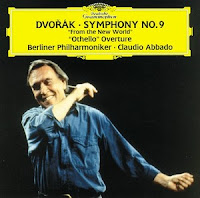
The symphonic world may love, remember and forever attribute Mahler's Second Symphony with the gifted maestro, but to me, the Chevalier Abbado will forever reign as the King of the New World, where his sprightly interpretation of the third ('scherzo') movement of Dvořák's Ninth Symphony paints the most picturesque mental imagery of European longing and reflection with "the spirit" of new world discovery.  
 Bernstein summed the work up quite succinctly when he referred to the Ninth as “a New World symphony from the Old World, full of Old World Tradition.." Abbado's masterful technique certainly does it's composer and his audiences justice.

http://www.deutschegrammophon.com/en/cat/4576512
The Scherzo is listed as item 4 on
external site. I highly suggest a
purchase of this album or of the
third movement itself. You will NOT
be disappointed!
Abbado's influence on the Classical Realm continues to be missed.

Obituaries & Tributes/Listening Guides:

Deutsche Grammophon

Forbes


Rest In Peace, Maestro.


-Rose.